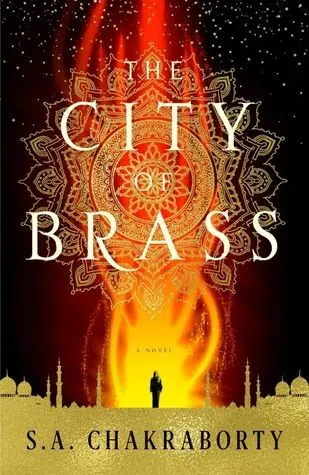
The City of Brass
- Goodreads
- 4.1
- pages
- 533
- November
- 2017
Book one of the Daevabad Trilogy. Nahri, a con artist on the streets of 18th-century Cairo, accidentally summons a djinn warrior during a scam and is pulled into Daevabad, a magical city where her own bloodline is a political weapon.
What is The City of Brass about?
The City of Brass begins on the streets of eighteenth-century Cairo, where Nahri makes her living as a con woman. She reads palms, performs fake healings and swindles Ottoman nobles, and she is convinced magic is just another trick. Her one real secret is that she can heal, and she keeps it hidden.
Then, during a staged exorcism, she accidentally summons a djinn warrior named Darayavahoush e-Afshin, Dara for short. He recognizes her healing gift as belonging to the Nahids, a powerful, long-dead family of healers who once ruled the djinn, and he insists on taking her to Daevabad, the legendary city of brass her ancestors built. The journey is a flight for survival through a world of creatures that want to help or kill them, and Nahri and Dara grow close along the way, even as he hides his own role in the city's bloody history.
The novel also follows Alizayd al Qahtani, called Ali, the devout second son of the king whose family overthrew the Nahids centuries ago. Raised to become the military commander who will serve his elder brother, Ali is troubled by how Daevabad treats the shafit, djinn with human blood, and he secretly supports a rebel group fighting on their behalf.
Daevabad is a powder keg of tribal grudges, and King Ghassan holds it together with an iron fist. Nahri's arrival as a returning Nahid healer and Dara's return as a warrior whose brutality is still remembered threaten to set it alight. As Nahri learns the healing arts, her place as leader of the Daeva tribe and the politics of the city, the king pushes Ali to befriend her, with a marriage to his brother in mind.
The press release described it as an imaginative alchemy of The Golem and the Jinni, The Grace of Kings and Uprooted.
Read it if you want
The worldbuilding is the headline. Chakraborty built Daevabad as an experiment in how djinn might have shaped their own religion, politics and divisions, and the result is a city of feuding tribes, ancient grudges and layered history. Locus compared its imagery and storylines to One Thousand and One Nights, and The New York Times praised the gusto with which everything, from massacres to zombies to djinn, is thrown into the story.
Nahri is a terrific lead: a pragmatic, suspicious con artist who never stops calculating, even when she is out of her depth. Alternating with Ali's chapters gives the politics two sides, and their slowly growing friendship is one of the book's quiet pleasures.
The romance between Nahri and Dara simmers rather than dominates, and the tension between what each of them wants and what each of them owes others gives the final act its force.
Who it is for
This is for readers who want a big, immersive fantasy rooted in Middle Eastern and Islamic folklore, with court politics, morally complicated characters and a romantic thread that matters without being the whole story. Fans of the comparison titles in its press release, The Golem and the Jinni and Uprooted, are a natural fit.
It may not suit readers looking for a romance-led plot or steam. The politics take time to unfold across more than five hundred pages, and the love story is one strand among several.
Content warnings
Show the content warnings
Violence, blood, death and war, including a massacre. Slavery, racism, religious bigotry, xenophobia and classism, including oppression of people of mixed human heritage. Genocide in the world's history. Murder, torture and injury detail, with medical content. Child death and gore. References to rape.
Full plot and ending (spoilers)
Spoilers for The City of Brass follow.
Nahri and Ali's friendship turns real. He teaches her to read and to use fire magic, she helps him with his Arabic and tells him about home, and her mentor Nisreen sees it as a betrayal of the Daevas. Ali falls out with the rebels he has been supporting and is nearly assassinated by one of them, and Nahri saves his life. Nahri learns of the plan to marry her to Muntadhir and goes to King Ghassan to negotiate her own bride price.
That night a fight breaks out between Muntadhir, Ali and Dara, and Dara tries to take Nahri away from Daevabad. She refuses, Ali intervenes, and when Dara threatens to kill Ali, Nahri agrees to go. On the lake they are intercepted by a warship led by Muntadhir and his companion Jamshid. Nahri unintentionally unleashes the full power bound up in Dara's enslavement, and he kills nearly everyone aboard and badly injures Jamshid. Ali falls into the lake, rumored to tear djinn apart.
As Nahri talks Dara down, Ali rises from the water possessed by the marid, ancient water spirits, and kills Dara in front of her.
In the aftermath, Ghassan retaliates against the shafit and the Daevas. Ali survives but is banished to Am Gezira, partly for his ties to the rebels and partly to hide the water magic he now cannot control. Muntadhir grieves Jamshid and resents Nahri, and Nahri, devastated, keeps her marriage agreement and is forced to publicly denounce Dara. In the final pages Kaveh and Nisreen hint at what might change if Dara's recovered slave ring could be brought to Manizheh e-Nahid.
Where it sits in the series
The City of Brass is the first book of the Daevabad Trilogy, followed by The Kingdom of Copper and The Empire of Gold. A later collection of stories set in the same world, The River of Silver, is numbered 3.5 and is best read after the trilogy. The first book ends with major consequences for every main character, so plan to continue with book two.
The City of Brass: FAQ
How spicy is The City of Brass?
The City of Brass is rated 1 out of 5 on our heat scale, which we call mild. The Spice Guide explains what each level means. Spice Guide
Is The City of Brass a standalone?
As far as our catalogue shows, yes. The City of Brass by S.A. Chakraborty is not part of a series, so you can start here.
What are the content warnings for The City of Brass?
Violence, blood, death and war, including a massacre. Slavery, racism, religious bigotry, xenophobia and classism, including oppression of people of mixed human heritage. Genocide in the world's history. Murder, torture and injury detail, with medical content. Child death and gore.
How long is The City of Brass?
The City of Brass is 533 pages. At an average pace that is roughly 12 hours of reading.
When was The City of Brass published?
The City of Brass was first published on November 14, 2017.
Is The City of Brass OK for teens?
Mostly, yes. It sits at 1 out of 5 for heat, so nothing explicit happens on the page. Check the content warnings for darker themes.
What should I read after The City of Brass?
If you liked it, try Dreamslayer, Crown & Captive or Defy the Night. They share the tropes that make The City of Brass work. Dreamslayer, Crown & Captive, Defy the Night