
The Empire of Gold
S.A. Chakraborty
Author Reading Guide
S.A. Chakraborty (Shannon Chakraborty) is the bestselling author of the Daevabad trilogy and The Adventures of Amina al-Sirafi, richly researched historical fantasy woven from Islamic history and djinn mythology.
S.A. Chakraborty
S.A. Chakraborty
S.A. Chakraborty
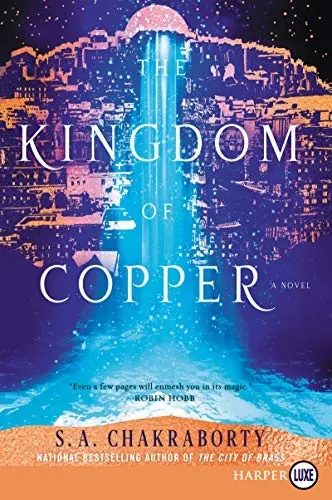
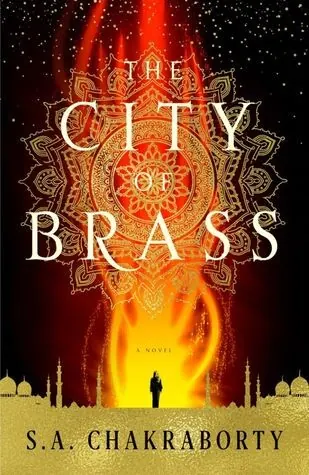
Shannon Chakraborty, who published her early work as S.A. Chakraborty, came to fantasy sideways: a history buff writing what she called historical fan fiction about the medieval Islamic world until it grew into The City of Brass (2017), one of the most acclaimed fantasy debuts of its decade. The trilogy it launched, continued in The Kingdom of Copper (2019) and concluded in The Empire of Gold (2020), follows Nahri, a con woman from the streets of eighteenth-century Cairo who accidentally summons a djinn warrior and gets dragged into Daevabad, the hidden brass city of the djinn, where her bloodline makes her a political weapon.
The Daevabad trilogy's reputation rests on two things. First, the worldbuilding: Chakraborty built her djinn city from deep research into Islamic mythology and history, with six tribes, centuries of sectarian grievance, and a magic system rooted in fire and faith. Daevabad feels inhabited in a way few fantasy cities do, and its politics have no clean sides; every faction has blood on its hands and a legitimate grievance. Second, the relationships. Nahri sits between Dara, the ancient warrior with an atrocity-filled past, and Ali, the rigid, devout prince who slowly becomes her unlikely ally. The Dara storyline in particular gives romantasy readers exactly the ancient-immortal-with-a-body-count dynamic they love, then interrogates it harder than the genre usually dares.
In 2023 she launched a new trilogy with The Adventures of Amina al-Sirafi, about a retired middle-aged pirate captain of the Indian Ocean pulled back for one last job. It was a bestseller and critical darling, and its sequel, The Tapestry of Fate (May 2026), continues Amina's story and ends on a cliffhanger that has readers pacing while book three remains unannounced. Amina is a gift of a narrator: devout, profane, creaky-kneed, and in love with the sea, proof that fantasy heroines do not expire at twenty-five.
Now the honest caveat for this audience: Chakraborty writes fantasy with romantic threads, not romance-first romantasy. On our spice scale she sits at 1, occasionally 2: charged moments, a few non-explicit scenes, and long stretches where the plot, not the pining, drives. The Nahri-Dara-Ali triangle simmers across three books as the slowest of slow burn arcs, and readers wanting a tidy romantic payoff should know the trilogy prioritizes consequence over wish fulfillment. Come for forbidden love tangled in tribal politics; stay for everything else.
Why she matters here: the Daevabad books are a gateway between romantasy and adult epic fantasy, beloved on BookTok for Dara and on fantasy forums for the politics. If your shelf is heavy on fae courts, Chakraborty offers the same intoxicating court intrigue with real historical texture, and her djinn make a bracing change from the genre's usual fae monoculture. She proves a book can be swoony and serious at once.
It helps to know how her career reframed itself midstream. The Daevabad books were published under the initials S.A. Chakraborty at a time when publishing still hedged on women's names in epic fantasy; the Amina books proudly carry Shannon Chakraborty on the cover, and the shift tracks with the books themselves growing more confident and more personal. Amina al-Sirafi in particular reads like an author writing exactly what she wants: a heroine with a bad knee and a daughter, heists interrupted by prayer times, marid and other spirits alongside meticulously researched Indian Ocean trade routes. Critics who called the trilogy her best work yet were not grading on a curve. Few authors level up on their second series; she did.
Start with The City of Brass, and give it a hundred pages to hook you; the Cairo opening is a slow, gorgeous fuse. Continue with The Kingdom of Copper and The Empire of Gold, in strict order. The Amina al-Sirafi books stand fully apart (set a thousand years earlier), so pirates-first readers can start there instead. Either door leads somewhere worth going.