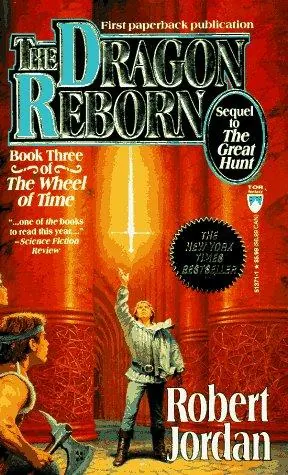
The Dragon Reborn
Robert Jordan
Author Reading Guide
Pen name of James Oliver Rigney Jr., the Vietnam veteran from Charleston who wrote The Wheel of Time, the fourteen-book epic that defined modern fantasy publishing.
Robert Jordan
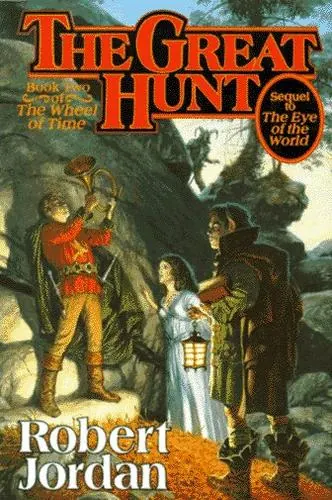
Robert Jordan
The Eye of the World
Robert Jordan
Robert Jordan
Robert Jordan was the pen name of James Oliver Rigney Jr., a Vietnam veteran, physicist by training, and lifelong Charleston, South Carolina man who wrote the biggest epic fantasy series of its era. He served two tours as a helicopter door gunner and came home decorated, studied at The Citadel, and worked his way into fiction partly through Conan the Barbarian novels in the early 1980s. Then in 1990 he published The Eye of the World, and epic fantasy had a new center of gravity for the next two decades.
The Wheel of Time runs fourteen volumes plus a prequel, New Spring, and follows Rand al'Thor, a sheepherder from the Two Rivers who turns out to be the Dragon Reborn, prophesied to fight the Dark One and doomed to go mad doing it. Around him Jordan built one of the most fully furnished worlds in the genre: the Aes Sedai and their White Tower, the Aiel and their waste, a dozen nations with their own dress, politics, and proverbs. His gift was scale with texture. Thousands of named characters, and you somehow remember an alarming number of them.
Jordan died in 2007 of a rare cardiac disease with the series unfinished, leaving notes, dictation, and a completed ending. Brandon Sanderson, then a rising fantasy author, was chosen by Jordan's widow and editor Harriet McDougal to finish the job, producing The Gathering Storm, Towers of Midnight, and A Memory of Light between 2009 and 2013. That handoff has become the template for how a beloved series can be landed after its author is gone, and it made Sanderson a superstar in the process.
Honesty section: the middle books sag, badly. Books eight through ten are famous for chapters where braids are tugged, skirts are smoothed, and almost nothing happens. The gender politics are creaky, all sniffing women and baffled men, and the romance is the weakest thing Jordan wrote. Rand ends up in a committed arrangement with three women at once, delivered with roughly the heat of a tax form, a 0 on our spice scale. And yet Mat Cauthon's chapters alone justify the journey, the battle sequences are still the standard, and the ending genuinely delivers.
The Amazon Prime Video adaptation ran three seasons from 2021 before being canceled in May 2025 over costs, to loud fan grief, with animated projects and other spinoffs reported to be in the works since. For romantasy readers, this is ancestry rather than kin: the chosen ones, the bonded warders, the magic academies of your current favorites all have Jordan's fingerprints somewhere on them. He is where a lot of your authors learned what big feels like.
The fandom deserves its own paragraph. Wheel of Time readers built one of the internet's first great theory cultures, spending literal years between books arguing over a single murder mystery Jordan left dangling, and communities like Dragonmount are still active decades on. Jordan's widow Harriet McDougal, who was also his editor and one of the great unsung figures in fantasy publishing, edited the series before and after his death, chose Sanderson, and shepherded the ending into the world. The re-read culture is real too: finishing the series once earns you respect, finishing it twice earns you concern, and the books reward the second pass with foreshadowing planted ten volumes early. Whatever the adaptations do next, the text itself has proven remarkably cancellation-proof.
Where to start: The Eye of the World, which reads like comfort-food Tolkien before the series becomes fully itself around book four, The Shadow Rising, generally held up as the peak. Commit or don't. This is a four-million-word relationship, and like Fitz and the Fool, it rewards the readers who stay.