The Stone Sky
N.K. Jemisin
The Stone Sky
N.K. Jemisin
Author Reading Guide
N.K. Jemisin is the first author in history to win three consecutive Hugo Awards for Best Novel, for her Broken Earth trilogy, and one of the most influential fantasy writers of her generation.
The Stone Sky
N.K. Jemisin
N.K. Jemisin
The Obelisk Gate
N.K. Jemisin
N.K. Jemisin
The Fifth Season
N.K. Jemisin
N.K. Jemisin
The Kingdom of Gods
N.K. Jemisin
N.K. Jemisin
N.K. Jemisin
N.K. Jemisin
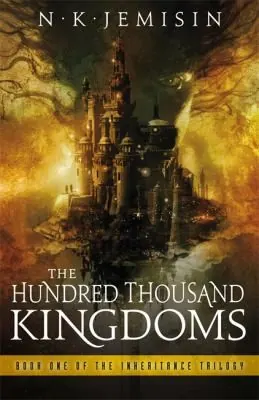
N.K. Jemisin spent years being told her fiction was too different to sell. She worked as a counseling psychologist while writing, collected rejections, and broke through in 2010 with The Hundred Thousand Kingdoms, the first book of her Inheritance trilogy, in which a young woman named Yeine is summoned to a floating city, named an heir to a throne she never wanted, and drawn into the orbit of enslaved gods, one of whom, Nahadoth, remains one of fantasy's great dangerous love interests. The book was nominated for the Hugo, the Nebula, and the World Fantasy Award, and announced a writer who treated fantasy's oldest furniture, gods, empires, chosen bloodlines, as things to interrogate rather than inherit.
Then came the run that rewrote the record books. The Fifth Season, The Obelisk Gate, and The Stone Sky, published from 2015 to 2017, each won the Hugo Award for Best Novel, making Jemisin the first author ever to win three years running, and the first to win for every book in a trilogy. The Fifth Season is the entry point: a planet wracked by apocalyptic seasons, a caste of people who can quell or cause earthquakes and are enslaved for it, and a mother searching for her daughter across a dying world. It opens with one of the most audacious structural tricks in modern fiction, told partly in second person, and it earns every prize it won. She has since completed the Great Cities duology, published the collection How Long 'til Black Future Month, and been named a SFWA Grand Master, the field's highest career honor, an extraordinary thing for a writer whose debut is barely fifteen years behind her. The Great Cities books, The City We Became and The World We Make, imagine New York's boroughs waking up as human avatars who must defend their city, and they show her in a looser, funnier register than the Broken Earth's controlled devastation.
What defines Jemisin is that her worlds have consequences. Oppression in her books is not aesthetic, it is load-bearing: systems, histories, and characters all bend around it, and her protagonists, frequently Black women, get to be furious, powerful, and right. Her prose is direct and muscular, her structures are experimental without being homework, and her endings hit like verdicts.
Honesty requires saying plainly: Jemisin is not a romance author, and nobody should pick up the Broken Earth trilogy expecting one. On our spice scale her work runs about a 1 to 2. The Inheritance trilogy is the exception that proves the rule, since Yeine and Nahadoth's story is a genuine mortal-and-god romance with a few explicit scenes, and it will feel familiar to anyone who loves a morally gray immortal with catastrophic intensity. Content-wise, expect heavy themes throughout her catalog: slavery, the death of children, and systemic cruelty, all handled seriously.
So why does she belong on a romantasy site? Ancestry. The dangerous god-as-love-interest, the heroine who gains impossible power, the empire that deserves burning: Jemisin built definitive versions of the material romantasy now runs on, and she did it with a rigor that will recalibrate what you accept from lesser books. She is the strong drink between sweeter courses, and readers who make the trip almost always come back changed.
Start with The Hundred Thousand Kingdoms if you want the closest thing to romantasy she has written, a self-contained trilogy opener with a love story at its heart. Start with The Fifth Season if you want her masterpiece and can handle a book that opens with grief and never apologizes. Read the Broken Earth in strict order, it is one continuous story. Either way, clear your schedule.