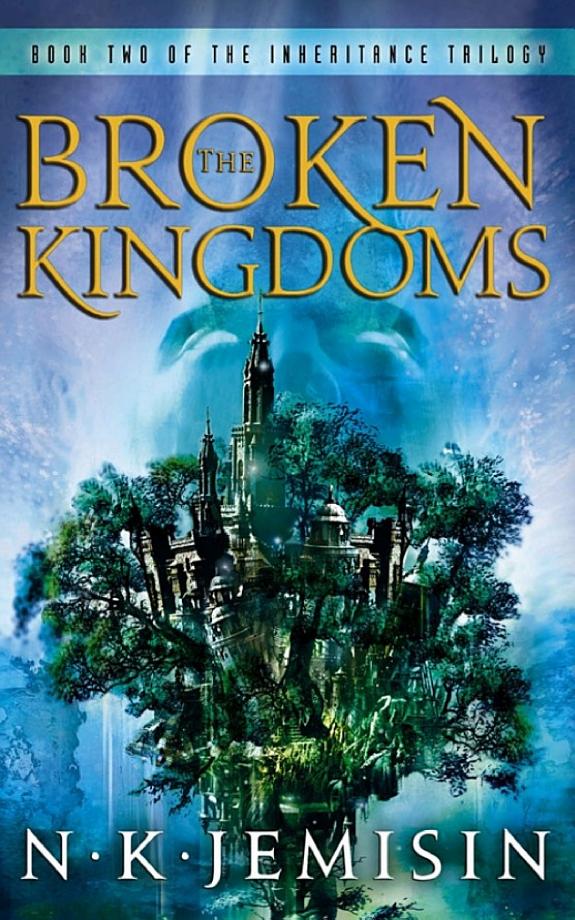
The Broken Kingdoms
Oree is a blind artist living in the city of Sky, where gods walk among mortals and magic hums through every street. When she finds a godling who can't die in the gutter outside her home, she gets pulled into a conspiracy that threatens the fragile peace between mortals and divine. This is the second book in N.K. Jemisin's Inheritance trilogy, and it's just as inventive as the first.
Everything You Need to Know About The Broken Kingdoms
Oree is a blind artist whose eyes can see magic where sighted people see only stone and shadow. She survives in a city where gods walk the streets, literally, they've descended to live alongside humans, but she's learned to ignore them. When she finds a homeless man starving in an alley and brings him home, everything unravels. He's more than homeless. Oree names him Shiny, and he is no godling at all but a god serving out a punishment in mortal flesh, and his presence in the city destabilizes ancient agreements. A murder investigation spirals into questions about divinity, consent, and what it means to love someone whose very existence is a violation. The city's political structure, held together by grudges and ancient pacts, begins to crack.
Jemisin's worldbuilding is detailed without being overwhelming, the gods feel genuinely alien, not just humans with powers. Oree's blindness is never magical solution or inspiration-porn; her perspective is simply different and sometimes advantageous, sometimes not. The central relationship (Oree and the godling) is genuinely strange and unsettling in the best way, it's tender and horrifying simultaneously because he is fundamentally powerful and she is fundamentally vulnerable. The mystery moves at a great pace. Supporting characters (particularly Oree's neighbor Shiny and her cousin Sieh) are complex and morally ambiguous. The book asks questions about agency, consent, and love without preaching. Prose is gorgeous, specific metaphors, sensory language that works for a blind narrator.
Sexual coercion and noncon elements (central to the plot and relationship dynamic, not shocking surprise, but the tension of it). Violence, slavery references, child death (off-page), body horror from god-magic, implied cannibalism, grief. Sexual content is present but not graphic. Themes of trauma and recovery throughout.
Shiny is Itempas, the Bright Lord himself, one of the Three, cast down into mortal flesh as punishment after the Gods' War and condemned to walk the world until he truly changes. He is not a godling, and he is not Sieh, whose book is The Kingdom of Gods.
The murders run on demon blood. Oree learns she is a demon, a mortal descended from gods, and her blood is lethal to immortals. The New Lights cult has been using exactly that to kill godlings, and they want Oree as a weapon. Her godling ex, Madding, is one of the casualties, and his death lands hard because he is the warmest presence in the book.
Oree ends the book pregnant by Itempas, and they do not get to stay together. His punishment is not finished, and she chooses a quiet mortal life, leaving the city of Shadow to raise her child away from gods. Bittersweet is the right word, and the book earns it.
If you loved The Fifth Season's complex worldbuilding and The City We Became's magical realism, read this. Book 2 of The Inheritance Trilogy, but can be read standalone (you're introduced to the world fresh through Oree's eyes, the previous book's events are history, not prerequisite). Readers who want romance that's complicated and honest. Readers interested in how power imbalances play out when one party is literally divine. Warning: it's heavier than typical romance-centered fantasy.
Book 2 of The Inheritance Trilogy. Can be read standalone, Oree's story is self-contained, and the worldbuilding is explained through her discoveries. If you want more context on the gods and the world's history, read The Hundred Thousand Kingdoms first, but it's not required. The trilogy concludes with Kingdom of Gods. Reading order: The Hundred Thousand Kingdoms (book 1) → The Broken Kingdoms (book 2) → Kingdom of Gods (book 3).
Reader Reviews
No reader reviews yet. Be the first!