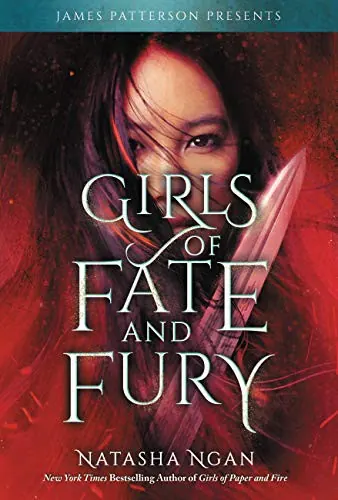
Girls of Fate and Fury
Natasha Ngan
Author Reading Guide
Natasha Ngan wrote one of the most quietly devastating queer young adult fantasies of the last decade, and Girls of Paper and Fire has never stopped finding new readers.
Natasha Ngan
Natasha Ngan
Natasha Ngan
Natasha Ngan is a New York Times bestselling author who grew up between Malaysia, where the Chinese side of her family is from, and the UK. She studied Geography at Cambridge, then worked as a social media consultant, a fashion blogger, and a yoga teacher before writing full time, and she now lives on the west coast of France with her partner and a Staffordshire bull terrier named Nova. Her first two novels, The Elites in 2013 and The Memory Keepers in 2014, were speculative young adult books that found a modest audience. Her third changed everything.
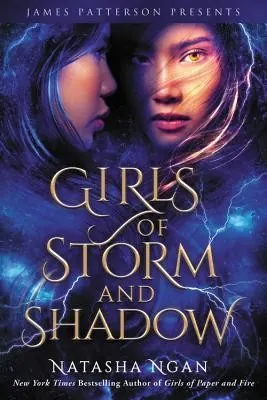
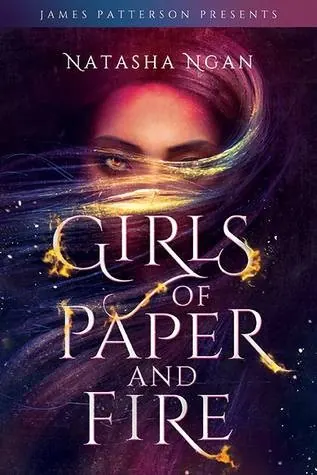
Girls of Paper and Fire is set in Ikhara, a kingdom sorted into a rigid caste system: Paper castes are fully human, Steel castes are part demon, and Moon castes are demon and hold the power. Every year eight girls from the Paper caste are selected as concubines for the Demon King. Lei is taken as a ninth, chosen for her unusual eyes, and the book follows what she does inside a system designed to make her compliant. What she does is fall in love with another Paper Girl, and that romance becomes the engine of a story about justice, power, and revenge. The trilogy continues through Girls of Storm and Shadow and concludes with Girls of Fate and Fury in 2021.
What defines Ngan's writing is restraint set against real brutality. She does not flinch from what the palace is, and the book carries an explicit content warning for sexual assault that readers should take seriously. The assault is on the page and it is treated as trauma with consequences rather than as a plot device. Against that, the romance between Lei and Wren is written with enormous tenderness, and the contrast is the whole point. Ngan is also very good at sensory worldbuilding. The food, the silks, the cosmetics, and the physical experience of being kept are rendered in detail that makes the gilding feel like a cage.
On heat, this sits at roughly a 1 to 2 on our spice scale. The intimate scenes between Lei and Wren are present and emotionally significant but written with a soft focus rather than explicitly. The tension is enormous, and Ngan draws out the wanting across a long stretch of the first book, which puts her firmly in slow burn territory. Readers coming from adult open-door romantasy should adjust expectations. What you get instead is a romance where every touch carries genuine risk, because both women are property and being caught means death.
Why she matters to a romantasy audience: this is one of the foundational queer fantasy romances of the current era, and it did the work before the market rewarded it. The forbidden love structure here is not aesthetic, it is material, built on caste and ownership, and that gives it a weight most examples of the trope never reach. It is also a reminder that young adult fantasy can be more emotionally brutal than its adult equivalent while staying closed door. If you have only read the fae end of the genre, this is a useful widening.
Where to start: Girls of Paper and Fire, obviously, and read the trilogy in order because it is one continuous story rather than three separate ones. Be aware that the second book is a road novel and structurally very different from the first, which frustrates some readers who expected another palace story. Stay with it. The third book brings everything back together. Check content warnings before you begin. If Ikhara works for you and you want more East and Southeast Asian inspired fantasy with a queer core, She Who Became the Sun is the strongest follow-up on our shelves. Her earlier novels, The Elites and The Memory Keepers, are worth reading only if you become a completist.