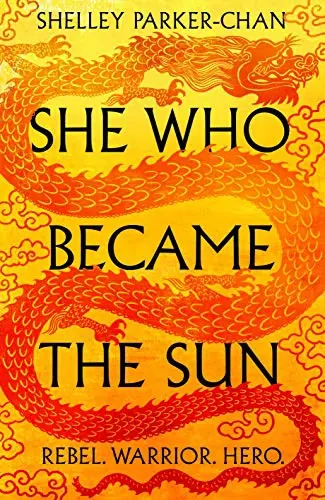
She Who Became the Sun
Zhu disguises herself as a boy to escape a convent and claim her dead brother's destiny in revolutionary China. Her ambition and hunger for power drive her to wage war, form alliances, and reshape history. Gender, identity, and revolution fuel this epic tale.
Everything You Need to Know About She Who Became the Sun
In famine-struck Zhongli village, a seer gives the Zhu family's eighth son, Zhu Chongba, a fate of greatness, and gives the second daughter nothing. When bandits orphan the children, Chongba dies of despair, and his sister makes a cold calculation: she takes his name, his identity, and his promised fate. As Zhu Chongba she survives a monastery, and when the Mongols burn it down she joins the Red Turban rebellion, climbing from nobody monk to commander through intelligence, ruthlessness, and absolute refusal to accept the role she was assigned.
Parker-Chan's queer reimagining of the rise of the Ming Dynasty's founding emperor is historical fantasy with the throttle down: war, politics, gender, and desire tangled together, and no comfortable answers.
The gender dynamics are built into every choice Zhu makes. She's not fighting sexism as a subplot, it's the entire pressure system she's figuring out. The writing pulls you into her perspective so fully you forget there's a narrator. The political intrigue is detailed and believable. Characters operate on competing ideologies, not good-vs-evil. Zhu's queer relationship unfolds naturally and carries real weight. The pacing feels like watching a chess game, calculated, tense, never wasting a scene.
Violence (battle scenes, deaths), war and political execution, gender dysphoria exploration (positive representation), sexual content (not explicit but present), references to poverty and starvation, colonization themes.
Zhu's mirror is General Ouyang, a eunuch serving the Mongol prince Esen while nursing a blood debt against Esen's family, the people who destroyed his own. Their arcs rhyme: both were marked for erasure, both choose ambition over peace. Ouyang's betrayal of Esen is the book's gut punch. Zhu survives what should kill her, binds her life to Ma Xiuying, and ends the book claiming the title of Radiant King, greatness seized rather than granted. The cost of that climb is the point, and the sequel makes her pay it.
If you loved The Poppy War's protagonist-driven narrative or Six of Crows' morally gray scheming, this is essential reading. Comp: V.E. Schwab's intensity meets a historical epic scope. Not for readers who need likable protagonists, Zhu makes brutal choices and doesn't apologize. If you want light fantasy romance, skip this. This is about power, identity, and the cost of ambition.
Book 1 of Radiant Emperors. The series continues her story, but this book's arc is complete enough to feel whole. You'll want book 2 immediately for what comes next.
Reader Reviews
No reader reviews yet. Be the first!