The Shadow Wand
Laurie Forest
Author Reading Guide
Laurie Forest writes a long, dense fantasy series about a bigoted protagonist unlearning everything she was raised on. It arrived with one of the loudest controversies in young adult publishing and outlasted it.
Laurie Forest published The Black Witch on 2 May 2017 through Harlequin Teen, and the release became a publishing case study before most readers had a copy. A pre-publication campaign accused the book of racism, driven largely by the fact that its narrator, Elloren Gardner, begins the story holding every prejudice her society taught her. Defenders pointed out that the entire arc is the systematic dismantling of those beliefs. The argument was loud, it moved thousands of one-star ratings before the publication date, and it also made the book impossible to ignore. Forest kept writing, and eight years later the series has a fifth main-line volume and a readership that treats it with real devotion.
What defines her work is scale and slow moral reversal. Forest is not a tidy writer. The series runs long, the cast keeps expanding, and the worldbuilding piles on languages, factions, and magical species well past the point where most young adult fantasy stops adding. What she does well is exactly the thing the controversy circled: showing a protagonist who is genuinely, unpleasantly wrong at the start, and making the correction take years of story rather than one well-placed conversation. Readers who want a heroine who is right on page one should look elsewhere.
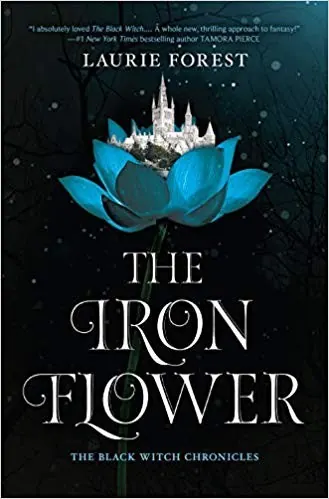
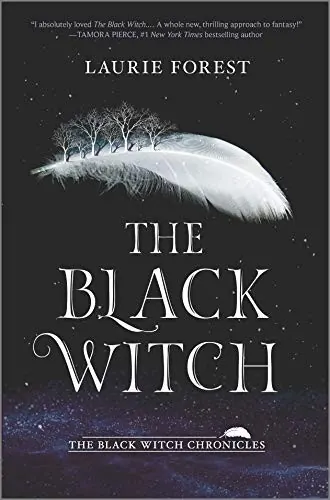
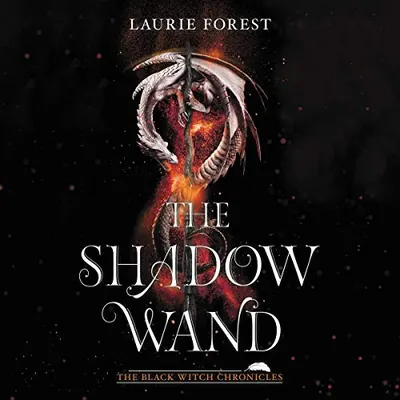
The main line runs The Black Witch (2017), The Iron Flower (2018), The Shadow Wand (2020), The Demon Tide (2021), and The Dryad Storm (2025). Around it sit the prequel novellas Wandfasted (2017) and Light Mage (2018), gathered with additional material as The Rebel Mages (2019). Read the novellas after book one; they spoil very little but they land far better with the context of the main narrative behind them. The magic school setting that hooks most readers in the first volume gets left behind faster than expected, and the series becomes a war story with a large ensemble.
Heat climbs steeply across the series, which is worth flagging. The Black Witch sits at a 1 on the spice scale, The Iron Flower is around 3.5, and The Shadow Wand reaches roughly a 4. That is a wider swing than most series attempt and it catches people out, particularly anyone handing book one to a younger reader on the assumption that the rest matches.
For romantasy readers, the appeal is that this is one of very few academy fantasy series where the school functions as a political institution rather than a backdrop for a friend group. Entrance, ranking, and expulsion all carry ideological weight. The central pairings are also a real enemies to lovers arc rather than a bickering one, because the obstacle between Elloren and the men in her orbit is what she believes about their species, not a misunderstanding that a single honest conversation would clear up.
A word on the controversy itself, since it will follow any recommendation you make. The dispute in 2017 was genuine and the objections were made in good faith by readers who found the opening chapters painful to sit inside. The counter-argument, also made in good faith, is that a novel about unlearning prejudice has to show the prejudice first and cannot flinch from how ugly it sounds coming from a sympathetic narrator. Both positions survive contact with the actual text. What is not in dispute is that the book demands patience from exactly the readers most likely to be hurt by its first hundred pages, and that is a real cost, not a rhetorical one.
Start with The Black Witch and nothing else. It is a slow, deliberately uncomfortable six hundred pages, and a significant number of readers stop around the halfway mark, which is a legitimate outcome rather than a failure of persistence. If you are still reading by then, the remaining four books move faster and get considerably angrier. Leave the novellas until you have finished at least book two, and set expectations for a long commitment rather than a weekend.