Graceling
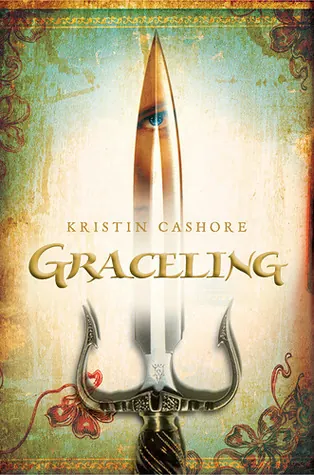
Katsa possesses a supernatural fighting ability called a grace, making her the most skilled warrior in the kingdom. When she discovers the grace is her own to command, not her uncle's, everything changes. She must use her power to uncover a dangerous conspiracy.
Everything You Need to Know About Graceling
Katsa has been killing for the king since she was eight years old. She is Graced, born with two different-coloured eyes and an extraordinary ability. Her Grace is survival: she is the deadliest fighter in the seven kingdoms, cannot be beaten in combat, and has been used as her uncle King Randa's enforcer and threat for as long as she can remember.
She hates it. She hates what she has been made into. Secretly, she runs a Council that works against the abuses of the seven kings, using her skills to help people rather than hurt them. When a mission to rescue an old man from a rival king's dungeon leads her to Po , a Graced fighter from Lienid who is more than he appears. Katsa's understanding of her own power and her place in the world begins to shift.
Po is warm, patient, and the first person who has ever matched Katsa in a fight. Their sparring sessions become something more complicated, and as they uncover a conspiracy that threatens all seven kingdoms, they are forced into a journey that tests everything Katsa believes about strength, control, and what it means to be free.
The villain at the centre of the conspiracy has a Grace more terrifying than any physical power, the ability to manipulate minds. Against an enemy who can make you believe anything, Katsa's combat skills are useless. She needs something she has never trusted: another person.
Katsa is one of the original badass fantasy heroines, and she holds up remarkably well. Cashore wrote her before the "strong female character" trope became a cliche, and it shows, Katsa's strength is not her personality. She is angry, socially awkward, afraid of her own power, and deeply uncomfortable with vulnerability. Her arc is about learning that being the strongest person in the room does not make you free.
The romance with Po is a masterclass in equals. He does not tame her, rescue her, or complete her. He challenges her, respects her boundaries (including her firm stance on marriage and independence), and proves his value by being genuine rather than impressive. Their sparring-to-romance progression feels organic.
The Grace system is elegant. Each Graced person has one extraordinary ability, and the range , from fighting to swimming to mind-reading, creates natural power dynamics and political complications. The villain's Grace (mind control) is genuinely unsettling.
Cashore's prose is clean and confident. She does not over-describe or over-explain. The world feels lived-in without lengthy exposition dumps.
A child is used as an instrument of state violence (Katsa's backstory). Mind control and loss of autonomy. A character accidentally kills someone as a child. Physical violence and combat throughout. A controlling, manipulative king. A villain who can make anyone believe anything. A character struggles with fear of intimacy and commitment. Brief references to abuse of Graced children by monarchs. A child is endangered in the final act.
King Leck of Monsea is the true villain. His Grace allows him to manipulate perception and memory, he can make anyone believe his lies simply by speaking. He has been torturing his own people, including his daughter Bitterblue, while the entire kingdom believes he is a benevolent ruler. The horror of his Grace is that resistance is almost impossible.
Po's Grace is not fighting, as he initially claims. He can sense the presence and intentions of every living thing around him. He allows people to believe his Grace is combat-related because the truth makes him too dangerous politically. His honesty with Katsa about this , and her reaction, is a key relationship moment.
Katsa kills Leck with a thrown knife from an impossible distance. She is the only person who can resist his Grace long enough to act, because her survival Grace includes mental resilience. It is satisfying but also raises questions about whether killing was the right solution, which Cashore does not shy from.
Katsa's refusal to marry Po, even after they are clearly in love, is a deliberate narrative choice. Cashore commits to Katsa's autonomy as non-negotiable. Po accepts it completely. For 2008, this was a radical choice in YA fantasy.
A foundational YA fantasy pick. Hand it to Hunger Games and Throne of Glass readers who want a heroine defined by capability and anger, and to romantasy readers curious about the books that came before the boom. The romance is present but restrained, no spice. Skip it if you need fast plotting throughout, the back half is a long survival trek.
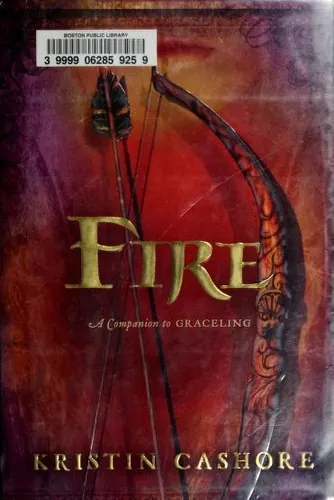
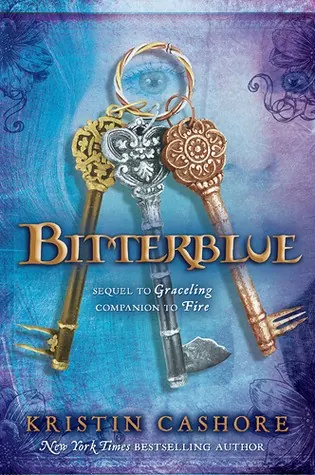
Graceling is the first book in the Graceling Realm series, which now runs five books: Fire is a companion novel set in a neighbouring land, Bitterblue follows Leck's daughter years later, and Winterkeep and Seasparrow continue Bitterblue's story. The books are connected but each can be read independently. Graceling was published in 2008 and helped define the YA fantasy genre.
Reader Reviews
No reader reviews yet. Be the first!