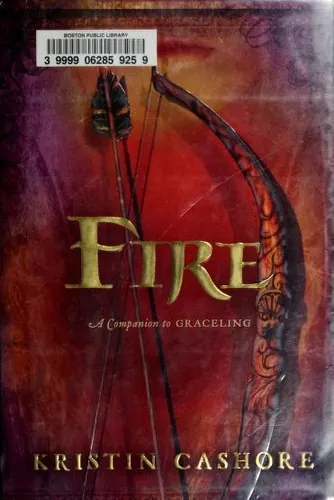
Fire
Fire is the last human monster with the power to influence minds, making her both weapon and outcast. Her choices hold the fate of kingdoms in balance as enemies close in from all sides. She must decide whether to use her power for destruction or redemption.
Everything You Need to Know About Fire
Fire is a human monster, the last of her kind. In the Dells, monsters are creatures of extraordinary beauty and colour that can read and manipulate minds. Fire has her father's stunning appearance (hair that shifts like flames) and his mental powers, but she refuses to use them the way he did. Lord Cansrel, her father, was a monster who used his abilities to control a king and nearly destroyed the kingdom. Fire is determined to be nothing like him.
But the Dells are falling apart. The new young king, Nash, is barely holding the world together against rebel lords and foreign threats. His brother Brigan, the army commander, distrusts Fire on principle , she is what her father was, and her power could control anyone in the kingdom if she chose to use it.
Fire is pulled into the political crisis because she is the only person who can read the minds of captured spies and uncover the conspiracy threatening the throne. Working alongside Brigan forces both of them to confront their assumptions about each other, and the slow, reluctant respect between them becomes something neither expected.
The question at the centre of the book is whether power inherited from a monster can be used for good, or whether the capacity for destruction is the same as the act.
Cashore writes internal conflict with extraordinary precision. Fire's struggle with her own nature, wanting to help but terrified of becoming her father , gives the book a psychological depth that most fantasy romances do not attempt.
Brigan is a slow-burn love interest who earns every inch of the reader's affection. He starts as hostile and closed off, and his gradual recognition of Fire as a person rather than a threat is beautifully handled. The romance is quiet, intense, and built on mutual respect.
The monster concept is original. In a genre full of vampires, Fae, and shifters, Cashore's monsters, beings of beauty that can control minds, offer something genuinely different. The ethical implications are explored thoroughly.
The prose is Cashore's strongest. She writes with restraint and emotional intelligence.
A character's father was manipulative and emotionally abusive. Discussion of mind control and consent. Violence and warfare. A character is hunted and attacked because of what she is. Themes of inherited guilt. A character deals with the aftermath of her father's crimes. Moderate sexual content. War violence and political assassination.
Fire's decision to use her powers fully in the final battle, after a book of restraint , is the climactic moment. She enters the minds of the enemy army and turns them against each other, winning the war at the cost of crossing a line she swore she never would. The ambiguity of whether this makes her like her father or entirely different is deliberately unresolved.
Brigan and Fire's relationship consummates late in the book, after the trust has been built through shared danger and vulnerability. The physical intimacy follows emotional intimacy, which gives it weight.
The connection to Graceling's world is subtle. Fire takes place in the Dells, a kingdom on the other side of the mountains from the Seven Kingdoms. The tunnel between the two worlds appears briefly, establishing the geographic link.
Fire is the second book in the Graceling World series but functions as a standalone companion novel. It is set in a different kingdom than Graceling and takes place before the events of that book. Can be read independently.
Reader Reviews
No reader reviews yet. Be the first!