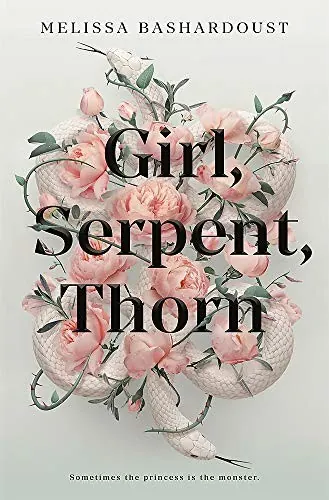
Girl, Serpent, Thorn
Melissa Bashardoust
Author Reading Guide
Author of Girls Made of Snow and Glass and Girl, Serpent, Thorn, writing quiet, queer fairy tale retellings drawn from Persian and European folklore.
Melissa Bashardoust
Melissa Bashardoust took her English degree at UC Berkeley, where she rediscovered creative writing, children's literature and fairy tale retellings, and she has been working that seam ever since. She lives in Southern California with a cat named Alice and more copies of Jane Eyre than she strictly needs, which is roughly the correct amount of information to have about an author who writes books this interior. Her surname is pronounced BASH-ar-doost.
Her debut, Girls Made of Snow and Glass, took Snow White apart and rebuilt it as a story about two women rather than a woman and a mirror. It pulls from the Snow Queen as much as from Snow White, and its central relationship is between a stepmother and a stepdaughter who are both trapped by what men decided they should be. The imagery lives in cold and reflection. It was well received and marked her out as someone doing something structurally different from the retelling boom around her.
Girl, Serpent, Thorn is the better book and the one to read first. Soraya has been cursed with poisonous skin by a div, one of the Destroyer's demonic servants, and has spent eighteen years hidden inside her family's palace so as not to damage the reputation of her twin brother, the shah of Atashar. When a female div named Parvaneh is captured, Soraya sees a chance to break the curse. Bashardoust builds it from the Shahnameh, Zoroastrian cosmology and Persian folklore, welded to European fairy tale bones, and the result has deadly gardens, moth-like beings and burial grounds that feel genuinely unfamiliar rather than reskinned. The queer romance at its centre is the emotional engine, and it is one of the few forbidden love stories in this space where the forbidding is entirely the heroine's own body.
Heat is the honest caveat. Bashardoust writes at a one on our book spice ratings. These are young adult books, the romance is longing and restraint and one or two devastating touches, and there is no explicit content at all. Girl, Serpent, Thorn has a heroine who literally cannot touch anyone without killing them, so the restraint is thematic rather than incidental, but readers arriving from a four-chili shelf should know what they are picking up. Content notes are mild by genre standards: violence, imprisonment, some body horror around the curse, and a strand of self-loathing that is handled with more care than most.
For a romantasy reader she functions as a palate cleanser. When the fae kings and the dragon riders start blurring together, a two-hundred-and-fifty-page Persian fairy tale about a girl who is poison is exactly the reset that makes the next big book land again. She also belongs on any list of authors who expanded what the genre's source material could be. The current shelf is heavily Celtic and Norse. Bashardoust, alongside authors like Sue Lynn Tan writing Daughter of the Moon Goddess, showed that the folklore well is a great deal deeper than that. Her queer central romances also predate the genre's recent broadening, which is worth crediting.
Where to start: Girl, Serpent, Thorn, without question. It is tighter, stranger and more assured than the debut, and it works completely as a standalone with no series commitment. If it lands, go back to Girls Made of Snow and Glass, which shares the interest in women who are shaped by other women but is looser in its plotting. She publishes slowly and has no sprawling backlist, so this is a two-book relationship rather than a shelf project. Go in for atmosphere, mythology and a romance built entirely on restraint. Do not go in expecting spice, action set pieces or a series to binge. If you want to find your next read in a similar register, the reader quiz is a decent starting point, or browse the wider dark fairytale tag.