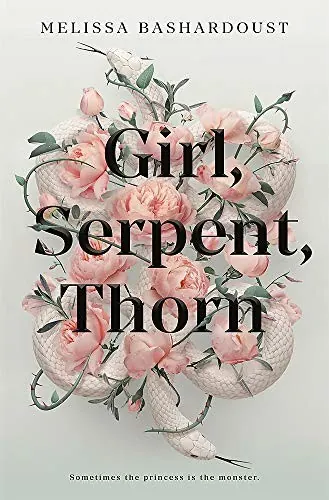
Girl, Serpent, Thorn
A cursed Persian princess is locked away because her touch brings death to all who touch her. When she escapes, she discovers a hidden world where her curse is both weapon and prison. She must learn to wield her power before those hunting her close in.
Everything You Need to Know About Girl, Serpent, Thorn
Soraya is a princess who has spent her life hidden away because her touch is poison, a curse tied to a bargain her mother made with the divs, the demons of Persian myth. Her twin brother is the shah, her family celebrates Nowruz in the palace she haunts from the shadows. Two arrivals crack her world open: Azad, a young soldier who doesn't flinch at what she is, and Parvaneh, a captive parik with moth wings who hints the curse can be undone. What Soraya does to become touchable sets off consequences that put her whole family in danger.
The Persian mythology is the real thing, divs and pariks and the simorgh, not a reskinned European faerie court. Soraya is allowed to be angry and wrong in ways heroines rarely are, and the book takes her rage seriously instead of punishing her for it. Parvaneh is a love interest with her own agenda and history. And the central theme lands: the story refuses to treat being cured as the happy ending.
Lifelong isolation and confinement. Poisoning and deaths by touch. Betrayal by a trusted figure. Monstrous transformation. Violence, including against family members.
Azad is the Shahmar, the serpent-crowned demon king of legend, and trusting him is the mistake that drives the whole second half. The love story is with Parvaneh, and it's earned: Soraya visits her in dreams, wins back her trust, and gets the girl. At the very end the simorgh offers Soraya a feather that would strip the poison and make her fully human. She refuses. The poison she spent the book trying to cure turns out to be her strength, and she keeps it on her own terms.
For readers who want sapphic romantasy with real fairy tale bones, closer to a dark fairytale than to court intrigue books. If you like character-driven stories about self-acceptance more than battle scenes, this delivers. Skip it if you need fast pacing or a large-scale war plot, the story stays intimate.
Standalone, complete in one volume. Bashardoust also wrote Girls Made of Snow and Glass, another standalone fairy tale reimagining, but the two are unconnected.
Reader Reviews
No reader reviews yet. Be the first!