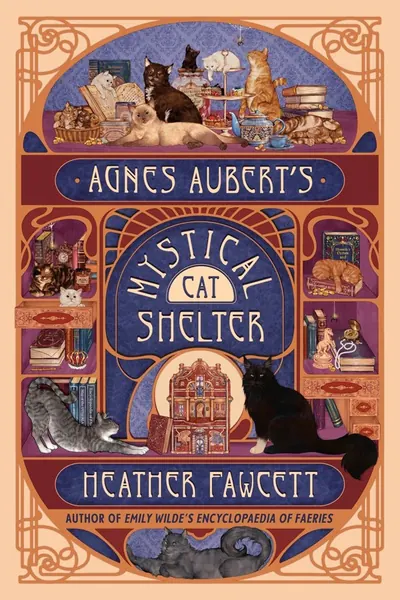
Agnes Aubert's Mystical Cat Shelter
Heather Fawcett
Author Reading Guide
Heather Fawcett writes the Emily Wilde books, a cosy academic fantasy series about a Cambridge dryadologist cataloguing faeries and entirely failing to notice she is in a romance. New York Times, USA Today and Sunday Times bestseller.
Heather Fawcett
Heather Fawcett
Heather Fawcett
Heather Fawcett
Heather Fawcett is a Canadian author living on Vancouver Island with a master's degree in English Literature and a bachelor's in Archaeology, which is close to the ideal academic background for someone who writes fake scholarship for a living. She writes for adults, teenagers and children, her books have been translated into more than twenty languages, and by her own account they somehow all end up containing dragons. She had a career before Emily Wilde, but Emily Wilde is what made her a bestseller in three countries at once.
What defines the writing is voice. The Emily Wilde books are presented as the field journals of their protagonist, which means the reader is stuck inside the head of a brilliant, socially disastrous academic who records her own emotional life with the same detachment she applies to faerie taxonomy. The comedy comes almost entirely from the gap between what Emily writes down and what is obviously happening. It is a difficult trick to sustain over three books and Fawcett sustains it. The folklore is the other pleasure: her faeries behave like the ones in actual folk tradition, which is to say they are bound by rules, they bargain in bad faith, and they are casually cruel without being evil in any way a human would recognise.
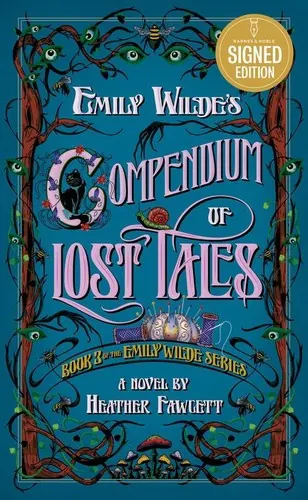
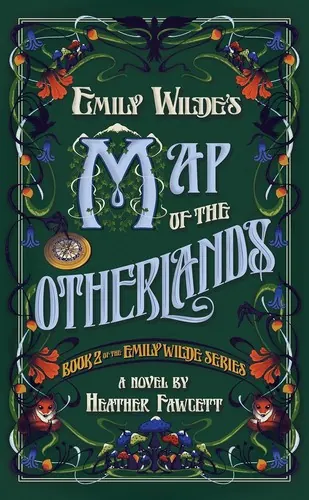
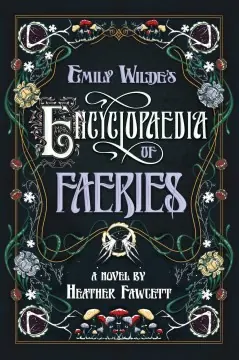
Emily Wilde's Encyclopaedia of Faeries, published in 2023, sends Emily to the far north to complete the first comprehensive encyclopaedia of faerie species, where she is joined, unwanted, by her academic rival Wendell Bambleby, who is charming, lazy, obviously hiding something, and not remotely as human as he claims. Emily Wilde's Map of the Otherlands followed in 2024 and Emily Wilde's Compendium of Lost Tales closed the trilogy. The arc is complete, which is worth saying in a genre where it frequently is not.
On heat, this is a 1 on our book spice ratings, possibly generous. Doors close. The entire romantic charge lives in manners, in what is not said, and in Emily's inability to process a compliment. Readers who need explicit content will be bored. Readers who have ever enjoyed a nineteenth century novel will recognise the machinery immediately and will find it very effective.
The other thing Fawcett gets right is the academic setting, which most fantasy handles badly. Emily's career pressures are specific and petty in a way anyone who has been near a university will recognise: publication politics, funding, a rival who is better liked than he deserves to be, and the constant low-grade fear of being scooped. The fieldwork sections read like actual fieldwork, cold and tedious and occasionally terrifying. It gives the fantastical material something solid to sit on, and it is why the books work for readers who normally find faerie stories weightless.
She matters to a romantasy audience because she anchors the cosy, academic wing of the genre almost single-handedly. There is a large readership that loves fae stories and wants nothing to do with the spicier end of the shelf, and Emily Wilde is the book that group hands to each other. The rival-to-lover dynamic is done with unusual restraint, and the professional respect between the two leads is real rather than asserted. If a reader tells you they bounced off ACOTAR but still like faeries, this is the recommendation.
Where to start: Emily Wilde's Encyclopaedia of Faeries, then Map of the Otherlands, then Compendium of Lost Tales, strictly in order. The journal format takes about forty pages to click and readers who abandon it usually do so before that point, so give it the full first chapter or two. Her books for younger readers are worth a look afterwards if the voice works for you, but nothing else in the catalogue is a substitute for starting at the beginning of this trilogy.