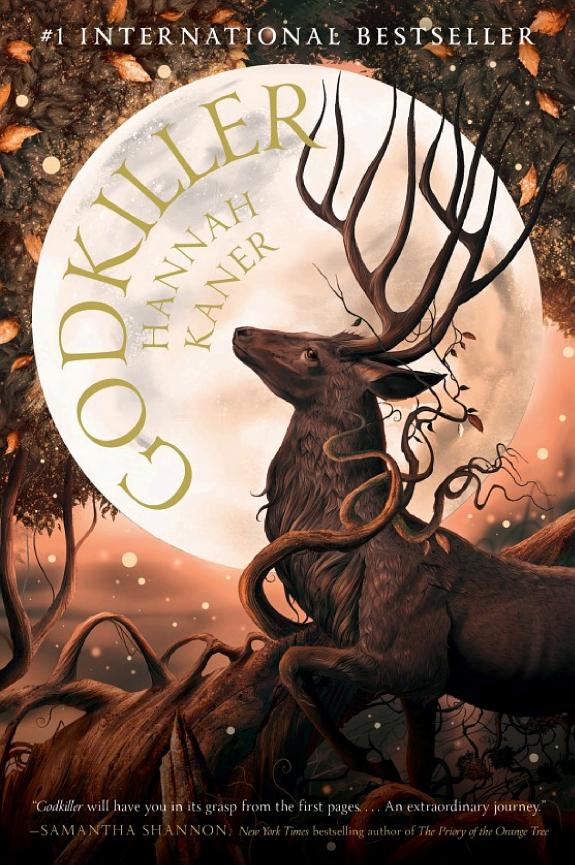
Godkiller
A girl discovers she possesses the rare, forbidden power to kill gods themselves. Choosing to use that power will reshape her world, topple empires, and cost everything she holds dear. She must decide whether the price is worth the freedom it promises.
Everything You Need to Know About Godkiller
Kissen is a godkiller, a veiga, someone who hunts and destroys gods for a living. In a world where gods are real, small, and feed on human devotion, Kissen's job is to free people from gods that have become parasitic or dangerous. She lost her family to a fire god as a child and has no patience for divine beings of any kind.
Then she meets Inara, a young noble girl who has a god literally stuck to her . Skediceth, a small white lie god bonded to Inara's shadow. Kissen cannot kill Skedi without killing Inara. Reluctantly, she agrees to escort them to a place where the bond can be safely broken. Along the way they pick up Elogast, a former knight with his own baggage and a connection to the king.
What starts as a road trip becomes something larger as they uncover a plot that threatens the fragile peace between humans and the remaining gods. The world is post-war, gods were recently culled en masse, and the survivors are scared, diminished, and angry.
The premise is fresh. A world where gods are small, petty, dependent on belief, and sometimes genuinely harmful, and someone whose job is to kill them. Kissen is a fantastic protagonist: angry, disabled (prosthetic leg), competent, and slowly softening without ever losing her edge.
Skedi the white lie god is delightful , genuinely funny, morally flexible, and more complex than he first appears. The found-family dynamic between the four travellers builds naturally. The world-building about how gods work (belief as currency, shrines as anchors) is one of the most interesting takes on divinity in recent fantasy.
Violence against both humans and gods. A protagonist dealing with childhood trauma (family killed by a god). Physical disability depicted honestly. Death. Themes of religious persecution and fanaticism. Brief gore.
The journey ends at Blenraden in a battle against Hseth, the fire god who killed Kissen's family, now swollen with fresh worship. Hseth is brought down, and Kissen goes into the sea with her, calling on Osidisen, the sea god who owes her a promise, to survive. Her companions believe she is dead, which sets up the sequel.
The uglier reveal is King Arren. Elogast's oldest friend survived his wound in the god war by taking divine fire into his chest, and the man who banned the gods is quietly turning into one. The betrayal lands hardest on Elo, who gave up his knighthood for him. The book ends on a cliffhanger, and Sunbringer picks up directly from here.
If you liked The Jasmine Throne's political fantasy, Piranesi's weird divinity, or Sabriel's monster-hunting protagonist, Godkiller hits similar notes. It is also great for readers burned out on romantasy who want character-driven fantasy with romance as a subplot rather than the whole plot.
Not the best choice if you want a fast-paced action book. It is a slow build with a lot of walking and talking. The romance is a very slow burn and not the primary focus.
Godkiller is book 1 of The Fallen Gods trilogy by Hannah Kaner. Followed by Sunbringer and the concluding volume. The series should be read in order.
Reader Reviews
No reader reviews yet. Be the first!