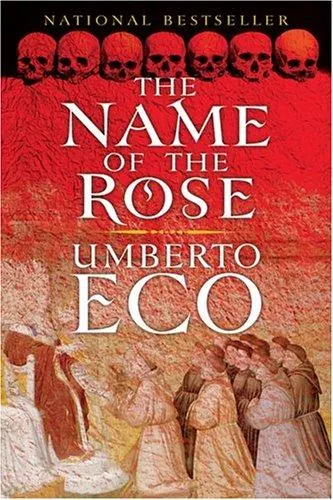
The Name of the Rose
Umberto Eco
Author Reading Guide
Umberto Eco (1932-2016) was the Italian semiotician and novelist behind The Name of the Rose and Foucault's Pendulum, medieval mysteries and conspiracy epics written by one of the most learned people ever to attempt popular fiction. He is the furthest thing from romantasy on this site, and worth knowing anyway.
Umberto Eco
Let's not pretend: Umberto Eco is not a romantasy author, and he would have found the suggestion hilarious. He is in this database as ancestry and as the ultimate palate cleanser, the writer you pick up when you have finished your fifth fae court series of the year and want to remember what a book can do when it assumes you are brilliant. Born in Alessandria, Italy in 1932, Eco spent his primary career as a professor of semiotics at the University of Bologna, one of Europe's most famous public intellectuals, author of dense academic work on signs, meaning, and medieval aesthetics. Then, at nearly fifty, he wrote a novel, and the novel sold tens of millions of copies.
That novel was The Name of the Rose (1980), a murder mystery set in a wealthy Italian abbey in 1327. Franciscan friar William of Baskerville, essentially Sherlock Holmes in a habit, arrives with his novice Adso to attend a theological summit and finds monks dying one by one, the deaths circling a labyrinthine library and a forbidden book: Aristotle's lost second volume of the Poetics, the one about comedy. It is a proper page-turner wrapped around genuine arguments about heresy, poverty, laughter, and who controls knowledge. The 1986 film with Sean Connery made it even more famous, and a 2019 television series with John Turturro took another swing at it. If you have ever enjoyed a fictional library with secrets, and if you are on this site you demonstrably have, this is the great-grandparent of them all.
Foucault's Pendulum (1988) is the other essential. Three bored Milanese editors, drowning in crackpot manuscripts about Templars and Rosicrucians, decide to invent their own master conspiracy connecting all the others, feeding fragments into a computer and calling the result the Plan. Then people start believing it, and then people start dying. It is the definitive novel about conspiracy thinking, written decades before the internet made the subject urgent, and it is also slyly funny, which surprises people. His later novels, including Baudolino (2000), The Prague Cemetery (2010), and Numero Zero (2015), kept mining the same vein: how stories, forgeries, and lies shape actual history. He died in 2016, working nearly to the end.
Spice level: 0 on our 0-5 scale, and honestly the romance content overall rounds to zero too. Adso has one feverish encounter in The Name of the Rose that he spends the rest of his life processing, which is somehow both the least and most romantasy thing imaginable. You do not come to Eco for feelings. You come for the furniture of the mind.
So why should a romantasy reader care? Because the genre you love runs on ingredients Eco perfected: the deadly library, the coded manuscript, the scholar-detective, the sense that the right book in the wrong hands can end the world. Dark academia in particular is unthinkable without him. Reading him is also simply good calibration. His pacing is glacial by BookTok standards, he will happily spend four pages describing a church door, and finishing him earns you something: the knowledge that you can, and a new tolerance that makes everything else feel fast.
Where to start is easy, because there is only one right answer: The Name of the Rose, ideally in winter, ideally with patience for the first hundred pages, which Eco himself described as a deliberate penance to filter his readers. If you clear it, the back half moves like a thriller. Graduate to Foucault's Pendulum only if you enjoyed the digressions more than the plot. And if you bounce off entirely, no shame. Return to the vampires, richer for the attempt.