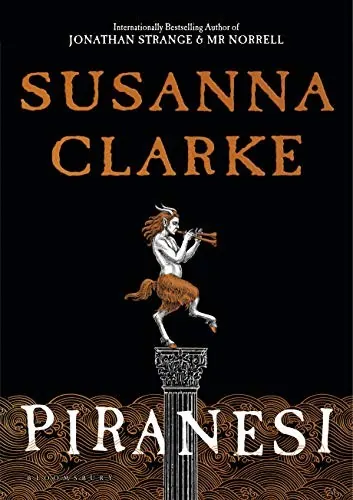
Piranesi
Susanna Clarke
Author Reading Guide
Susanna Clarke is the British author of Jonathan Strange & Mr Norrell and Piranesi, fairy stories for adults that read like nothing else being published. She writes rarely, and every book is an event.
Susanna Clarke
Susanna Clarke
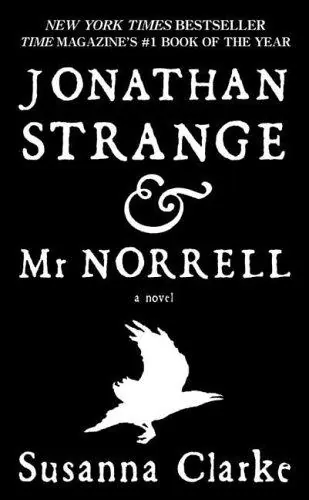
Susanna Clarke took roughly ten years to write her first novel, working on it in the evenings while editing cookbooks in Cambridge. When Jonathan Strange & Mr Norrell finally arrived in 2004, it was an 800 page alternate history of Regency England where magic is real, footnoted like an academic text and written in prose that sounds like Jane Austen wandered into a haunted wood. It became a bestseller, won the Hugo Award in 2005, and got a BBC miniseries adaptation in 2015. Not bad for a debut that publishers could easily have dismissed as unmarketable. It also won the World Fantasy Award and made the Booker Prize longlist, a rare trifecta for a novel about two rival magicians, Gilbert Norrell the fussy hoarder of English magic and Jonathan Strange his reckless pupil, whose feud pulls the old fairy roads open again.
Then she mostly disappeared. Clarke has been open about living with chronic illness that left her housebound for long stretches, and the follow-up everyone expected never came in the form anyone predicted. Instead, sixteen years later, she published Piranesi in 2020, a short, strange novel about a man living in an endless house of marble halls, statues, and tides. It won the Women's Prize for Fiction in 2021 and might be the most beloved book of that entire pandemic year. It is also nothing like her debut, except in the way it treats the impossible as calmly documented fact.
What defines Clarke is restraint. Her fairies are not love interests. The gentleman with the thistle-down hair, the fairy at the center of Jonathan Strange & Mr Norrell, is charming, beautiful, and completely inhuman, a creature whose kindnesses are indistinguishable from curses. That version of the fae, alien and dangerous rather than brooding and datable, is the older tradition that modern romantasy descends from. Reading her after a stack of fae court romances is like tasting the original recipe. Her worldbuilding arrives sideways, through invented scholarship, competing magical traditions, and the Raven King, John Uskglass, the absent medieval magician whose shadow hangs over the entire book without him ever properly appearing.
Her recent output has been small and lovely. The Wood at Midwinter, an illustrated short story, came out in 2024. Next up is The Bishop of Durham Attempts to Surrender the City, another illustrated story set back in the Strange & Norrell world during the fairy conquest of Northern England, publishing October 20, 2026 through Bloomsbury. There is also her 2006 story collection The Ladies of Grace Adieu, which fills in corners of the same universe with more overtly female magic than the novel allowed.
Heat level, to be clear: zero on our 0 to 5 scale. There is no romance arc to speak of, no kissing, nothing. Clarke is on this site as ancestry, not as romantasy. If you want your fae stripped of abs and returned to their original state as beautiful, terrifying problems, she is the antidote and the source material at once. She is also, sentence for sentence, one of the best prose writers in modern fantasy, and that is not a fashionable exaggeration. It is just true.
Where to start depends on your patience. Piranesi is short, accessible, and devastating, the ideal entry point if the big book intimidates you. Jonathan Strange & Mr Norrell rewards commitment like few novels do, but it is a slow build, and the footnotes are half the fun, so do not skip them. The Ladies of Grace Adieu works as a sampler between the two. Read her when you need a palate cleanser that reminds you why fairies were scary before they were swoony.