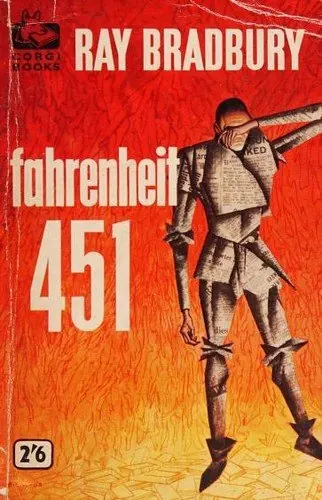
Fahrenheit 451
Ray Bradbury
Author Reading Guide
Author of Fahrenheit 451 and The Martian Chronicles. Speculative fiction's great poet, here because every reader's road runs through him eventually.
Ray Bradbury
Ray Bradbury is on this shelf for the same reason a bookstore keeps a copy of Fahrenheit 451 by the register: sooner or later, every reader arrives at him. Born in Waukegan, Illinois in 1920, self-educated in public libraries because college was never affordable, Bradbury became the writer who smuggled poetry into the pulps and made speculative fiction respectable enough for schoolrooms without ever losing its strangeness.
Fahrenheit 451, published in 1953 and written on a rented typewriter in a library basement, remains the definitive novel about book-burning, censorship, and the seductions of screen-fed comfort. Its firemen burn books while wall-sized televisions chatter, and every year it reads less like prophecy and more like observation. The Martian Chronicles turned colonization of Mars into a series of elegies; Something Wicked This Way Comes distilled every dark carnival that fantasy has run since; Dandelion Wine bottled an entire childhood summer. His short stories, hundreds of them, are where his reputation truly lives, small machines of wonder and menace that writers have been imitating for seventy years.
The prose is the point with Bradbury. He wrote science fiction like a man in love with October: sentences that taste of cut grass and carnival smoke, technology described with the awe of a kid at a magic show. He called himself a fantasy writer more than a science fiction one, and he was right; his rockets run on longing, not physics.
What he offers romantasy readers is ancestry rather than romance. The atmospheric dread of dark romantasy, the small-town gothic that books like The Hazel Wood trade in, the sense that wonder and menace are the same substance at different temperatures: Bradbury refined all of it. Something Wicked This Way Comes in particular is required reading for anyone who loves an autumn-flavored, carnival-dark fantasy, and it pairs strangely well with the gothic end of our shelf.
Start with Fahrenheit 451 because it is short and permanent, then The Martian Chronicles for the full flavor. Read him in October if you can arrange it; he is seasonal the way certain books on this site are beach reads. The Bradbury we track is below, zero peppers, maximum atmosphere.
The adaptations tell their own story about his range. Fahrenheit 451 has been filmed twice, by Francois Truffaut in the sixties and by HBO in 2018 with Michael B. Jordan, and neither quite bottled the book, which says more about the book than the filmmakers. Disney's 1983 Something Wicked This Way Comes, with Bradbury writing the screenplay himself, remains a cult Halloween staple, and The Ray Bradbury Theater ran for years on television with the author introducing his own stories. He also wrote The Halloween Tree, whose animated adaptation won an Emmy and became an annual October ritual for a generation of kids.
If the famous novels already sit on your shelf, the deeper cuts are the collections. The October Country is the essential one for readers who came here from the gothic end of the shelf, all autumn dread and small-town uncanny, and The Illustrated Man frames its stories inside a carnival drifter's living tattoos. Dandelion Wine also has a proper sequel, Farewell Summer, published half a century later, and Something Wicked shares its Green Town setting with both, so the three form a loose trilogy of the same haunted Illinois childhood. As for who he suits: readers who care how sentences sound, who think atmosphere is a plot, and who want their darkness melancholy rather than gory. He is a terrible fit for anyone in a hurry. Read one story a night and he stretches beautifully; binge him and the flavor blurs.