Katabasis
R.F. Kuang
Author Reading Guide
The Hugo and Nebula nominated force behind The Poppy War, Babel, and Yellowface. Not a romance author at all, and essential reading anyway.
R.F. Kuang
R.F. Kuang
R.F. Kuang
The Burning God
R.F. Kuang
R.F. Kuang
The Dragon Republic
R.F. Kuang
R.F. Kuang
R.F. Kuang
Let's be clear up front: R.F. Kuang does not write romantasy, and anyone who hands you The Poppy War expecting swoon owes you an apology. Rebecca F. Kuang is on this shelf because she is one of the defining fantasy authors of her generation, and because romantasy readers keep crossing over to her books and coming back changed.
She burst onto the scene with The Poppy War in 2018, a grimdark military fantasy inspired by twentieth-century Chinese history, written while she was still an undergraduate. It was a finalist for the Nebula, Locus, World Fantasy, and British Fantasy awards and won her the Crawford and Compton Crook awards. The trilogy, completed by The Dragon Republic and The Burning God, follows war orphan Rin from entrance exams to atrocities, and it does not flinch. It is brilliant. It is also devastating, and the content warnings are long and real.
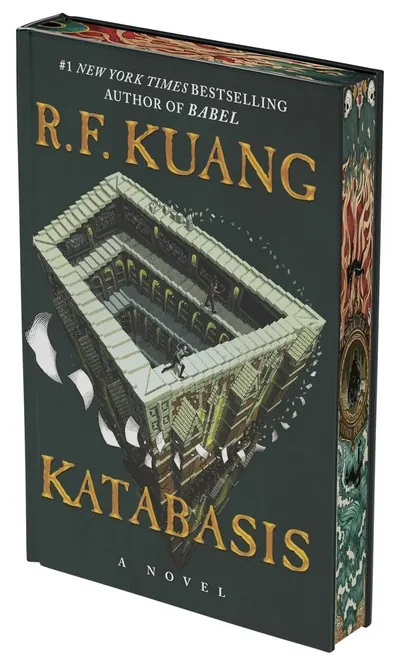
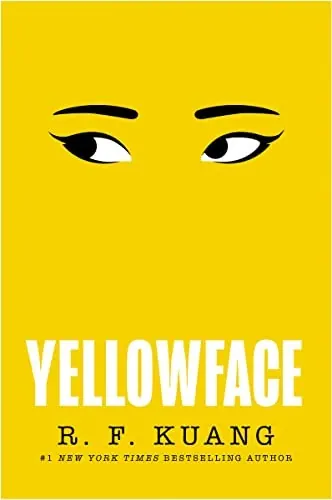
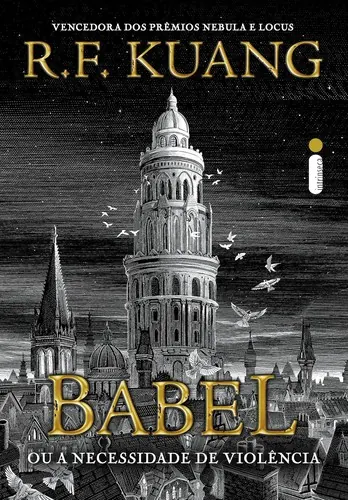
Then she refused to repeat herself. Babel in 2022 was a doorstop of dark academia about translation, empire, and violence at an alternate Oxford. Yellowface in 2023 was a venomous literary satire of publishing itself that hit number one on the New York Times list. Katabasis, her 2025 return to dark academia, sends two rival graduate students into Hell to retrieve their dead professor's soul, and it is the closest she has come to romance, with a genuine enemies-to-lovers thread running through the paradoxes and grief. She is a Marshall Scholar and translator, and she teaches creative writing at the College of the Holy Cross.
Spice: functionally zero. On our spice ratings everything she writes is a 0 to 1. Romance, where it exists, is subtext, tragedy, or academic rivalry that never quite resolves into kissing. Katabasis flirts hardest with the genre's tropes, but even there the yearning stays mostly theoretical. You do not read Kuang for heat. You read her because the prose and the anger are extraordinary.
For romantasy readers she works best as a palate cleanser and a perspective check. After a run of fae courts, The Poppy War recalibrates what stakes mean, and Babel will make you look harder at every magic system you have loved. Readers who want comfort should genuinely skip her. Readers who want to be wrecked, in the way BookTok means it when the tears are the point, have few better options.
Babel deserves its own note, because it has become a genre landmark. The novel won major awards including the Nebula for Best Novel and topped bestseller lists while being, at heart, an argument about how empires extract value from language and the people who carry it. Its magic system, silver bars powered by the meaning lost between translated words, is one of the most quoted worldbuilding ideas of the decade, and its footnotes-and-fury style has spawned a wave of imitators. If dark academia is your trope home, Babel is not optional reading. It is the load-bearing wall.
Kuang is also, plainly, a polarizing author, and pretending otherwise would be dishonest. Critics find her themes delivered with a heavy hand, and Yellowface in particular split readers between those who found it deliciously mean and those who found it exhausting. Katabasis drew the same divided response. None of this has slowed her down commercially, and the debate itself is part of why she matters: almost nobody reads a Kuang novel and has no opinion about it afterward.
Where to start depends on your tolerance. Yellowface is the most accessible and needs no fantasy background. Babel is the masterpiece. The Poppy War is the deep end. Whatever you choose, do not start Kuang the same week you need a happily ever after.