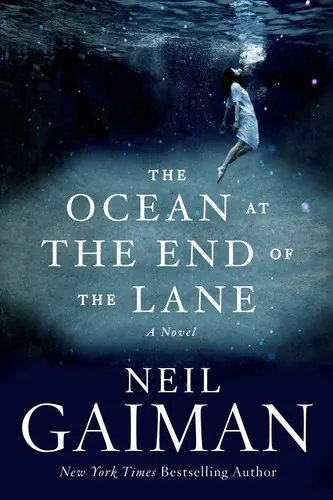
The Ocean at the End of the Lane
Neil Gaiman
Author Reading Guide
Author of American Gods, Stardust, and The Sandman. A cornerstone of modern fantasy whose fairy tales for adults helped shape the genre's DNA.
Neil Gaiman
Neil Gaiman
Neil Gaiman
Neverwhere
Neil Gaiman
Neil Gaiman
Neil Gaiman
Neil Gaiman spent four decades as fantasy's great magpie, collecting myths, fairy tales, and half-forgotten folklore and rebuilding them into stories that feel both ancient and entirely his. Born in Hampshire in 1960, he started as a journalist, broke through with the Sandman comics beginning in 1988, and turned the graphic novel into a respectable literary form more or less by force of example. Sandman's Morpheus, brooding lord of an otherworldly realm with a dysfunctional immortal family, is also a clear ancestor of every brooding immortal love interest the romantasy shelf has produced since; the aesthetic lineage is not subtle.
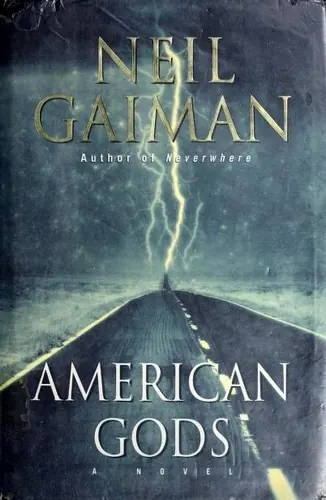
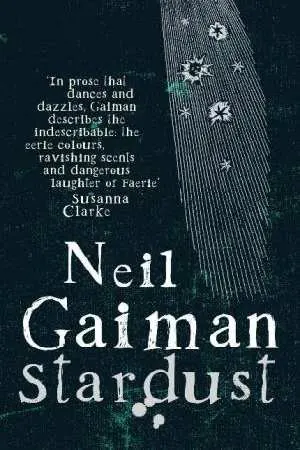
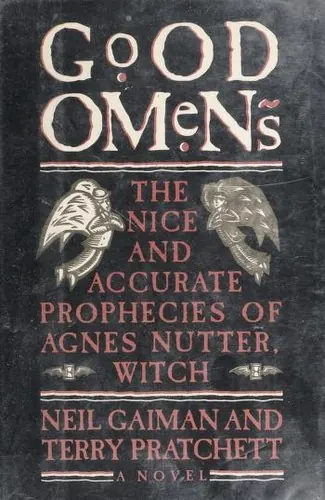
His novels move through registers most writers never attempt. Stardust is the closest to this site's heart: a fairy tale about a young man crossing the wall into Faerie to retrieve a fallen star who turns out to be a furious young woman, filled with witches, sky pirates, and a romance that sneaks up on both parties. It reads like a love letter to the pre-Tolkien fairy story and remains one of the great gateway fantasies. American Gods goes the other direction, a road-trip epic about old gods surviving in strip-mall America that won practically every award the genre offers. Coraline and The Graveyard Book proved he could frighten children with absolute precision and total respect, and Good Omens, co-written with Terry Pratchett, remains one of the funniest books fantasy has produced.
The prose is the signature: deceptively simple sentences that read like someone telling you a story by firelight, hiding their craft so well that imitators keep discovering how hard the trick actually is. His fae, in Stardust and across the short fiction, are capricious, beautiful, and dangerous, closer to Holly Black's courts than to anything cuddly.
It is also fair to note, because our readers follow book news, that serious allegations against Gaiman published in 2024 and 2025 led much of the community to reassess their relationship with his work, adaptations were shelved, and where his books sit for each reader has become a personal decision. We track the books; the weighing is yours to do.
On this shelf, Stardust is the natural fit and the one we recommend to romantasy readers first: it is short, complete, and contains one of fantasy's better grumpy-to-soft romances. The rest of his catalog we track is below.
For readers exploring beyond Stardust, the standalones each offer a different door. Neverwhere drops an ordinary Londoner into London Below, a shadow city of sewers, saints, and floating markets, and remains the best urban fantasy starter he wrote. The Ocean at the End of the Lane is the short, devastating one, a childhood memory of monsters and the three Hempstock women who guard the lane, and it reads in an evening while staying with you considerably longer. Norse Mythology retells the Eddas straight, no framing device, and works as a primer for anyone whose Norse knowledge comes entirely from Marvel. The short story collections, meanwhile, are full of fairy-tale retellings with teeth, the kind the current retelling boom descends from directly, and Coraline aside, most of this catalog is written for adults, whatever the fairy-tale packaging suggests.
As for who the books suit now, the honest answer is readers who have made their peace with the situation described above and still want the work itself. If that is you, the pattern to know is that Gaiman never wrote the same book twice, so loving one guarantees nothing about the next; match the register to your mood rather than reading through in order. Stardust for romance, Neverwhere for adventure, Ocean at the End of the Lane for a quiet gut-punch, Good Omens for laughing out loud on public transport, and Sandman, ten volumes deep, if comics are on the table.