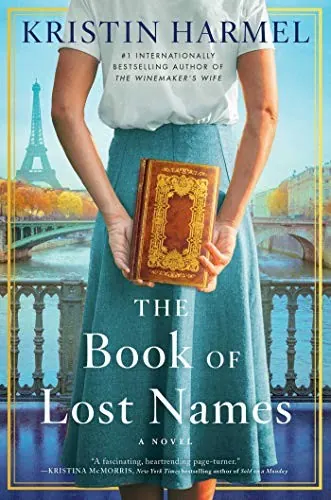
The Book of Lost Names
Kristin Harmel
Author Reading Guide
Kristin Harmel is a New York Times bestselling author of World War II historical fiction, including The Book of Lost Names. No dragons, no fae, but emotional devastation on par with any romantasy finale.
Kristin Harmel
Kristin Harmel started as a magazine journalist, writing for publications including People, before turning to fiction, and the reporter's instincts never left her. Her novels are built on research trips, archives, and true stories that sound invented. She published for years across women's fiction before finding the vein that made her a fixture of bestseller lists: World War II historical fiction centered on ordinary women doing extraordinary, dangerous things. Her books have been translated into more than thirty languages, and she co-founded Friends & Fiction, the popular web show and community she runs with several other bestselling novelists.
The Book of Lost Names, published in 2020, is the one you have most likely seen everywhere. Inspired by a true story, it follows Eva, a young Jewish woman in occupied France with a gift for forgery, who creates false documents to help hundreds of Jewish children escape to Switzerland, and who encodes the children's real names in an old book so they will not be lost forever. It became a massive book club favorite and remains her signature novel. The Forest of Vanishing Stars in 2021 told the story of a woman raised in the wilderness who teaches Jewish refugees to survive in the forests of Eastern Europe, and The Paris Daughter in 2023 followed two mothers whose lives are shattered by an Allied bomb in the suburbs of Paris. Her most recent novel, The Stolen Life of Colette Marceau, published in June 2025, became an instant New York Times bestseller with its story of jewel thieves, a bracelet lost in 1940s Paris, and a decades-old murder unraveled in modern Boston.
What defines Harmel is emotional engineering of the highest order. She structures dual timelines so the past and present collide exactly when it hurts most, and she writes grief, guilt, and survival with a directness that sneaks up on you. The honest criticism: her formula is visible if you read several books back to back, the dual timelines and late-book revelations following a recognizable rhythm, and her prose serves the story rather than calling attention to itself. Read one or two a year and the formula never gets old.
Let's be candid about why she is on a romantasy site: she is a palate cleanser, full stop. There is no magic here beyond the ordinary kind, and on our spice scale she is a 0, occasionally brushing 1. Romance threads run through her books, some of them lovely, but they stay chaste and often end in heartbreak, because history was not kind to lovers in 1942.
She earns her shelf space because the emotional muscles are the same ones romantasy works: impossible choices, love against terrible odds, found family, sacrifice. The parallel runs deeper than it first appears, because both genres are fundamentally about hope surviving in worlds designed to crush it. The women in her books are underestimated, resourceful, and forced to become more than anyone believed they could be, which is the exact character arc that powers half the fantasy romances on this site. If a romantasy finale has ever wrecked you, Harmel will wreck you with the added weight of knowing versions of these events actually happened.
Start with The Book of Lost Names, which is her best entry point and the book her readers press into friends' hands. Move on to The Forest of Vanishing Stars if you want survival and wilderness, or The Stolen Life of Colette Marceau if you want her with a heist twist. Do not read her on a plane unless you are comfortable crying next to strangers, and consider yourself warned that one Harmel usually turns into five.