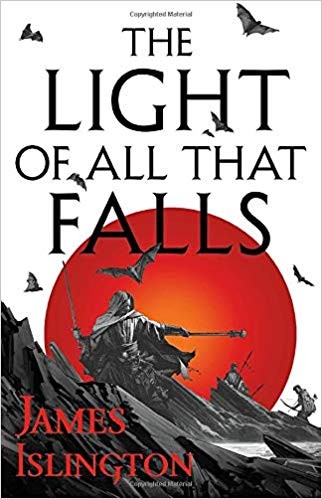
The Light of All That Falls
James Islington
Author Reading Guide
James Islington is the Australian fantasy author behind the Licanius Trilogy and The Will of the Many, one of the most loved epic fantasies of the 2020s. Zero romance, all plot, and worth every page anyway.
James Islington
James Islington is one of modern fantasy's great self-publishing success stories. A former software developer from Australia with no industry connections, he self-published The Shadow of What Was Lost in 2014, watched it climb the charts on word of mouth alone, and was picked up by Orbit, who reissued it and published the rest of the Licanius Trilogy: An Echo of Things to Come in 2017 and The Light of All That Falls in 2019. The trilogy built his reputation as a plot architect, the kind of writer who plants a small detail early in book one and pays it off eight hundred pages later in a way that makes you want to reread everything immediately.
Then came The Will of the Many in 2023, and Islington went from respected to essential. The book follows Vis, an orphaned prince hiding his identity inside the Catenan Republic, a Rome-flavored empire where power literally flows upward: citizens cede a portion of their Will, their life force and capability, to the people ranked above them. Vis refuses to cede to anyone, which makes him a walking crime. He gets recruited to infiltrate the Academy, an elite school where the empire trains its future leaders, and the result is part heist, part murder mystery, part brutal academic competition where exams can end careers and occasionally lives.
What defines Islington's writing is architecture. His plots are machines with no wasted parts. The Licanius Trilogy features time travel mechanics that actually hold together under scrutiny, which almost no fantasy series manages, and The Will of the Many ends with a twist that genuinely recontextualizes the entire book. His protagonists are competent, driven, and fun to root for. The honest criticism: the Licanius books front-load a lot of names and lore, and the opening stretch of The Shadow of What Was Lost feels like homework before the story catches fire. The Will of the Many has no such problem. It moves from the first chapter.
On heat, let's be clear. This is a 0 on our spice scale. A flat zero. There are friendships, loyalties, and faint hints of feeling, but nobody in a James Islington novel has time to kiss when there are exams that can kill you and an empire to quietly dismantle.
So why is he on a romantasy site? Because he sits squarely in the genre's ancestry, and because the Fourth Wing pipeline runs straight through him. If what hooked you in Fourth Wing was the academy setting, the rankings, the rivals, and the constant threat of being culled, The Will of the Many is that exact experience with the romance dial removed and the plotting dial turned to eleven. It is the palate cleanser we recommend most often to readers coming off a heavy romantasy binge. The sequel, The Strength of the Few, arrived in November 2025 and picks up directly after the first book's cliffhanger, expanding the world and the mystery of what the Hierarchy is actually built on.
One more thing worth knowing before you commit: Islington books are reread books. The twists are constructed so that a second pass reveals a completely different novel hiding under the first one, with clues sitting in plain sight that you sailed past. Readers on the site who rate him highest are almost always the ones who went back through. If you are the kind of reader who annotates, theorizes in group chats, and treats a series like a puzzle to be solved before the author solves it for you, he is arguably the best value in fantasy right now.
Where to start is easy: The Will of the Many, no contest. It is more accessible than his earlier work, reads fast for a six-hundred-page book, and the ending will tell you immediately whether you're an Islington reader. Continue with The Strength of the Few, and if you finish those craving more of his long-game plotting, circle back to the Licanius Trilogy and trust that the slow opening pays off. It does.