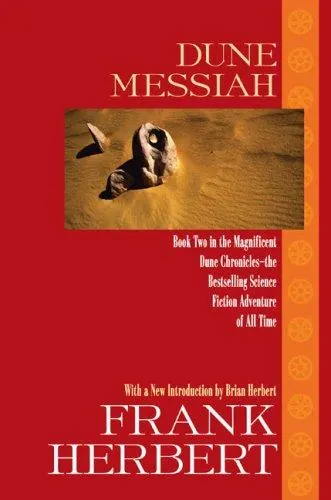
Dune Messiah
Frank Herbert
Author Reading Guide
Author of Dune (1965), the bestselling science fiction novel of all time and the blueprint for every desert-prophecy epic since. Ancestry shelf: politics, prophecy, sandworms.
Frank Herbert
Frank Herbert
Frank Herbert was born in 1920 in Tacoma, Washington, and spent decades as a working journalist and photographer before science fiction made him famous. The origin story of his masterpiece is one of the best in publishing: in 1957 he flew to Florence, Oregon to write a magazine article about a government project using grasses to stabilise moving sand dunes. The article never ran. The research swallowed him whole, mutating over six years into a novel about a desert planet, serialised in Analog magazine, and then rejected by roughly twenty publishers before Chilton, a company best known for printing auto repair manuals, took a chance in 1965. Dune went on to win the first ever Nebula Award for Best Novel, share the Hugo, and become the bestselling science fiction novel of all time.
Dune is the story of Paul Atreides, heir to a noble house handed control of Arrakis, the only source of the spice melange, the substance that makes interstellar travel possible. Betrayal destroys his family, and Paul flees into the desert with his mother Jessica, a member of the Bene Gesserit sisterhood, where the native Fremen come to see him as their prophesied messiah. Ecology, religion, politics, and dynastic scheming braid together into something the genre had simply never seen at that scale. Every chosen one raised by desert warriors, every spice-run economy, every giant sandworm in any medium since is quoting this book.
Herbert kept going, and the sequels are where things get strange and interesting. Dune Messiah (1969) exists almost entirely to dismantle the hero myth the first book built, a move fans hated then and critics admire now. Children of Dune (1976) became the first science fiction novel to hit hardcover bestseller lists. God Emperor of Dune (1981) stars Paul's son Leto II several thousand years on, having fused with sandworms into an immortal tyrant god, and remains one of the strangest books ever mass-marketed. Heretics of Dune and Chapterhouse: Dune followed before Herbert died in 1986 with the saga unfinished. His son Brian, with Kevin J. Anderson, later continued the universe in prequels of much-debated quality.
The adaptation history is its own saga: Jodorowsky's gloriously unmade 1970s version spawned a documentary, David Lynch's 1984 film flopped into cult status, and Denis Villeneuve's Dune (2021) and Dune: Part Two (2024) finally cracked it, winning Oscars and minting a new generation of fans. Dune: Part Three, adapting Dune Messiah, arrives in cinemas December 18, 2026, with Timothee Chalamet and Zendaya returning. Herbert is, sixty years on, arguably at his cultural peak.
Why is he on a romantasy shelf? Ancestry, and more romance-adjacent machinery than he gets credit for. Paul and Chani is a genuine love story with brutal costs, paid in full in Messiah, and now being paid again on screen. Jessica's loyalty to Duke Leto, chosen over her sisterhood's orders, sets the entire plot in motion. And the Bene Gesserit breeding programme is essentially the arranged-marriage and bloodline-destiny trope played as centuries-long horror. Heat level: 0 to 1, everything off page, as was the style. Honest criticism: the dialogue is stiff, everyone monologues internally at length, and the treatment of women gets stranger as the series wears on.
Where to start: Dune, no substitutions. Then choose your ending: stop while it is perfect, add Dune Messiah for the anti-hero coda before the film beats you to it, or push through to God Emperor if you want the strangest theology lecture in fiction, delivered by a giant worm who used to be a boy. However far you ride, read it before December 2026, because the theatre will be full of people pretending they already have, and you deserve to be one of the smug ones who actually did.