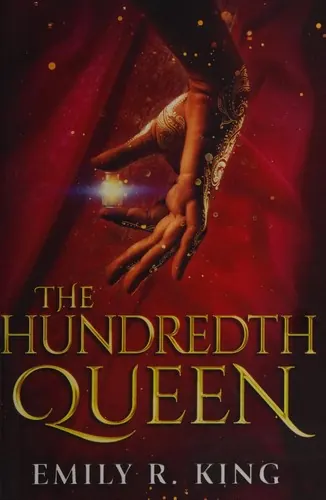
The Hundredth Queen
Emily R. King
Author Reading Guide
Emily R. King writes fast, plot-forward fantasy with warrior heroines, beginning with The Hundredth Queen. She has since worked through Greek myth and gothic fairy tale territory without ever slowing the pace down.
Emily R. King
Emily R. King was born in Canada, raised in the United States, and describes herself as a marine conservationist and an avid shark diver, which is a more interesting author bio than most. Her debut, The Hundredth Queen, was published in 2017 through Amazon Publishing and launched a four-book series. Since then she has written the Evermore Chronicles and the Wings of Fury duology, which turns to Greek myth and specifically to the women written out of it. She has four children and three cats, and the sheer output suggests she writes fast.
What defines her writing is momentum. King does not linger. Chapters end on turns, the prose is clean rather than lyrical, and she is comfortable moving a plot forward at a speed that would make many fantasy authors nervous. Her second-world settings draw on South Asian and Middle Eastern influences rather than the standard pseudo-medieval European default, and while she is writing commercial fantasy rather than anything anthropological, the change of furniture alone makes the books feel less familiar than their structure would suggest. Her heroines fight. That is not decoration either. Physical training and physical competence are usually central to the plot.
The Hundredth Queen follows Kalinda, a sickly orphan raised in a temple, who is unexpectedly claimed by an obsessive rajah as the hundredth queen in his collection and finds herself in a court where the wives fight each other in a tournament. The setup does a lot of work: it gives her a physical arena, a political trap, and a set of relationships with other women that are neither straightforwardly hostile nor straightforwardly supportive. The Fire Queen, The Rogue Queen and The Warrior Queen follow, and the series scales up from personal survival to overthrowing an empire. Wings of Fury is the better-written of her projects, taking Greek myth and giving it to the daughters and mothers instead of the heroes, but The Hundredth Queen is the more addictive read.
A fair criticism, and one that comes up in most reviews, is that the prose is functional rather than beautiful. King is writing for propulsion, not for the sentence, and readers who want language to slow them down and reward rereading will find her flat. The other recurring complaint is that the romantic leads are less interesting than the political situation surrounding them, which is a strange problem for a book of this type to have. Neither criticism is wrong. Both matter less than they should, because the pacing simply carries you past them, and most readers finish the quartet faster than they intended to.
Heat is low and should be stated clearly. On our spice scale she sits at about a 1. There is romance, there is forbidden attraction with real consequences, and there is essentially nothing explicit on the page. This is young-adult-leaning fantasy in temperature even where the protagonists are adults. Readers who came to the genre through Fourth Wing and want the same trial-by-combat structure at a fraction of the heat will find her a very good match. Readers who came for the heat will find her thin.
She matters as a gateway. There is a constant stream of readers entering romantasy from young adult fantasy, or from outside genre fiction entirely, who want the tournament structure and the doomed-attraction plotting without explicit content, and King serves them directly. She is also a useful recommendation for younger readers whose parents are paying attention, and for anyone building a reading habit back up after a slump, because her books are hard to put down and easy to finish.
Where to start: The Hundredth Queen and then straight through the quartet in order, since it is one continuous story rather than four separate ones. If the temple-and-tournament setup does not appeal, Wings of Fury is a clean alternative entry point and requires no knowledge of anything else she has written. Skip the Evermore Chronicles until you know whether you like her voice, because it is the most divisive of the three.