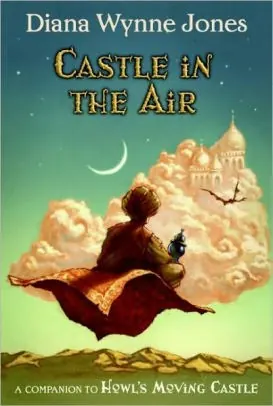
Castle in the Air
Diana Wynne Jones
Author Reading Guide
Diana Wynne Jones (1934-2011) wrote Howl's Moving Castle, the Chrestomanci books, and four decades of British fantasy that shaped nearly everyone writing the genre today.
Diana Wynne Jones
Diana Wynne Jones
Diana Wynne Jones was born in London in 1934, spent a chaotic wartime childhood being shuffled around England, and studied at Oxford in the 1950s, where she attended lectures by both C.S. Lewis and J.R.R. Tolkien. She started publishing fantasy in the early 1970s, and with Charmed Life in 1977, which won the Guardian Children's Fiction Prize, she found her signature register: magic treated as domestic fact, families as dangerous as any dark lord, and plots that look like chaos until the final chapters snap every stray detail into place. That structure became her trademark, and readers learned to trust that no detail was ever wasted, however random it looked at the time.
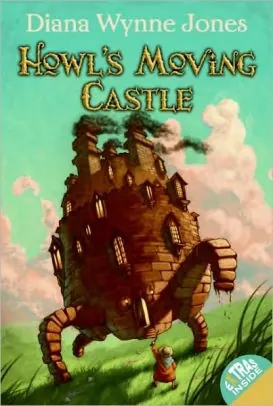
Her most famous book is Howl's Moving Castle, published in 1986, which turned forty in 2026 complete with anniversary editions. Sophie Hatter, cursed into old age by the Witch of the Waste, moves into the walking castle of the wizard Howl, a man whose glamour and drama conceal a genuine coward with a good heart. Hayao Miyazaki's Studio Ghibli adaptation in 2004 earned an Academy Award nomination and introduced her to millions, though the book is spikier and funnier than the film. Two loose sequels followed, Castle in the Air in 1990 and House of Many Ways in 2008.
The catalogue beyond Howl is deep. The Chrestomanci series, anchored by Charmed Life and The Lives of Christopher Chant, remains one of the best multiverse constructions in fantasy. Fire and Hemlock, from 1985, is a dense Tam Lin retelling that adult readers argue about to this day. The Dark Lord of Derkholm and The Tough Guide to Fantasyland lovingly demolished epic fantasy cliches a full decade before that became fashionable. She wrote over forty books before her death in 2011, and the consistency is frankly unfair. Archer's Goon, Dogsbody, and the Dalemark quartet round out a backlist that keeps yielding surprises for readers convinced they have already seen everything she can do.
What defined her was refusal of grandeur. Her wizards have mid-life crises and messy bathrooms. Her heroines are eldest daughters convinced they are destined for nothing, an assumption the books quietly dismantle. Her magic has no rulebook to memorize, it behaves like weather or plumbing, and her endings arrive in a rush that rewards rereading because every clue was sitting in plain sight. Neil Gaiman called her the best children's writer of her time, and he was not being polite.
Heat level: zero out of 5, full stop. These are children's and crossover books, and the romances in them are sly, offstage, and all the more effective for it. She belongs on this site as ancestry. Howl Pendragon is arguably the prototype of the modern fantasy love interest, vain, theatrical, secretly kind, and Sophie's unimpressed handling of him is the blueprint for every heroine who refuses to swoon on schedule. If your favorite romantasy hero is a dramatic disaster man, he has Howl in his family tree. Sophie herself, freed by her curse to finally be blunt, bossy, and unafraid, is just as influential: the grumpy heroine energy that romantasy keeps rediscovering was fully formed on her pages in 1986.
Start with Howl's Moving Castle, obviously, and read it even if you love the film, because they diverge in ways that matter. Then Charmed Life for the Chrestomanci door, or Fire and Hemlock if you want the strange, grown-up one. There is no wrong order and no waiting for sequels. Her shelf is complete, and it is one of the great complete shelves in fantasy. Her books were written for children, sharpened for adults, and age with the reader, which is the actual trick, and almost nobody else has ever pulled it off at this scale.