Court of the Undying Seasons
A.M. Strickland
Court of the Undying Seasons
A.M. Strickland
Author Reading Guide
A.M. Strickland writes queer dark fantasy about sympathetic monsters, from soul-walking necromancy to a vampire academy where the entrance exam might kill you.
Court of the Undying Seasons
A.M. Strickland
A.M. Strickland
A.M. Strickland
A.M. Strickland is a writer who has been building the same argument across three books: that the thing everyone calls a monster is usually the most honest character in the room. She splits her time between Alaska and Spain with her spouse, her pugs, and an unreasonable number of books, and she is openly asexual, biromantic, and genderqueer, which matters because that identity is not decoration in her fiction. It is the structural core of at least one of her novels.
That novel is Beyond the Black Door, published in 2019. Kamai is a soulwalker who can enter other people's souls as though they were houses, and there is a black door that appears in every soul she visits, one she has been warned never to open. The book is a court intrigue and a horror story, but the part readers keep talking about is Kamai herself, an asexual protagonist who spends the entire book struggling toward that understanding rather than arriving pre-resolved. Strickland writes the discomfort honestly, including the sex-repulsion, and does not tidy it into a lesson.
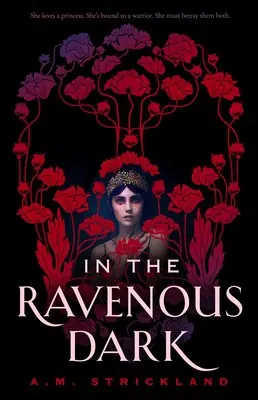
In the Ravenous Dark followed in 2021, a Greek-inflected fantasy about a bloodmage bound to an undead guardian in a city where magic is inherited and policed. Court of the Undying Seasons arrived in 2023 and is the most immediately accessible of the three. Teenagers are selected by lottery in a ritual called the Finding and sent to Castle Courtsheart to be trained by vampires, where they are either turned or subjugated depending on how much potential the vampires see in them. It is a boarding school book, a vampire book, and a queer romance, and it commits fully to all three.
What defines her writing is the refusal to make the dark thing safe. Strickland's antagonists are attractive because of what makes them dangerous, not in spite of it, and her heroines are usually the ones reaching toward that danger rather than being dragged. Her prose is sensory and slightly overripe in a way that suits the material, and her worldbuilding tends to be tight and closed rather than sprawling. One castle, one city, one set of rules broken carefully.
On heat, she sits around a 2 on our spice scale. These are young adult books published by Macmillan, so the physical scenes are suggestive rather than explicit, and the door usually closes at the interesting moment. What she delivers instead is atmosphere and charge. Blood, teeth, proximity, and want are doing the work that explicit description does elsewhere, and for a lot of readers that trade lands well. Go in expecting tension rather than detail.
Why she matters to a romantasy audience: she was writing queer vampire romance with real teeth before the current wave made it commercially obvious, and her books are among the small number in the academy category that treat the school as genuinely lethal rather than as a backdrop for cliques. She is also one of the few authors in this space writing asexual and aromantic experience into fantasy without making it a problem to be solved, which is worth knowing about even if it is not your own experience.
Where to start: Court of the Undying Seasons is the easiest entry point and the most fun. If it works for you, go back to Beyond the Black Door, which is stranger, slower, and more emotionally demanding. In the Ravenous Dark sits between the two and rewards readers who like their magic systems grim and their political stakes personal. All three are standalone, so reading order is entirely up to you. If you finish Court of the Undying Seasons and want more vampires with a literary streak, A Dowry of Blood is the obvious next stop, and it goes noticeably darker.