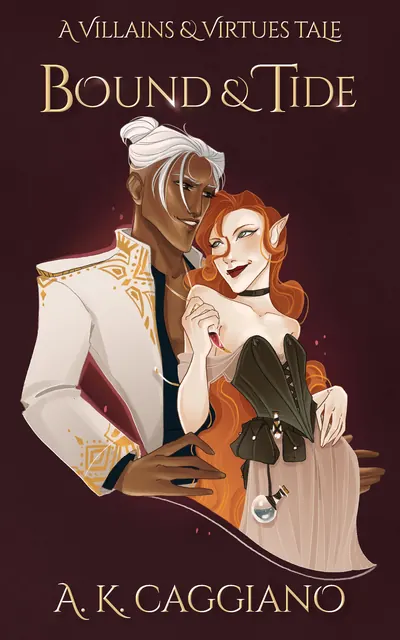
Bound and Tide
A.K. Caggiano
Author Reading Guide
A.K. Caggiano writes comedic dark romantasy that refuses to take itself seriously, and Villains and Virtues is the series that broke her out. Demon spawn, an accidental magical bond, and a great deal of arguing.
A.K. Caggiano
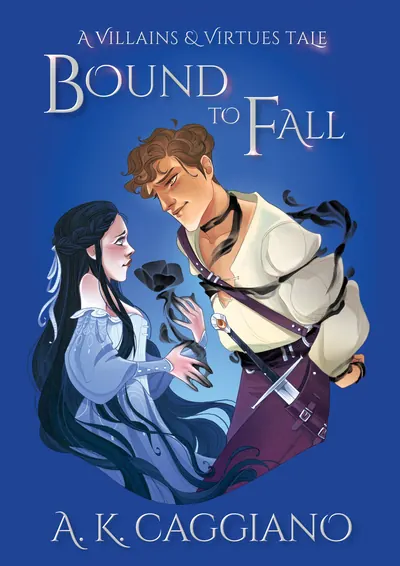
A.K. Caggiano
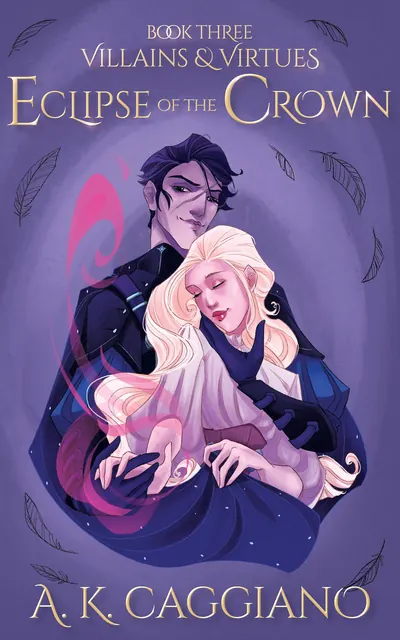
A.K. Caggiano
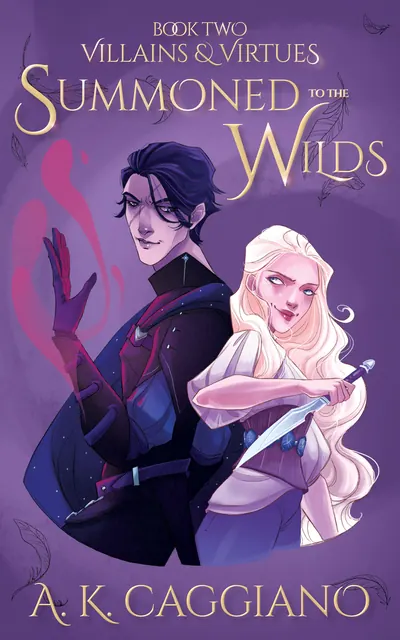
A.K. Caggiano
A.K. Caggiano
A.K. Caggiano is an independent author whose own bio says she likes cats, guacamole and not taking things too seriously, which turns out to be an accurate summary of her fiction. She was writing and publishing for years before Villains and Virtues found its audience, and the series has since been picked up for a wide print release with new cover art, so there are now several editions in circulation. The trajectory is the standard modern indie one: quiet catalogue, one book catches, everything else gets discovered backwards.
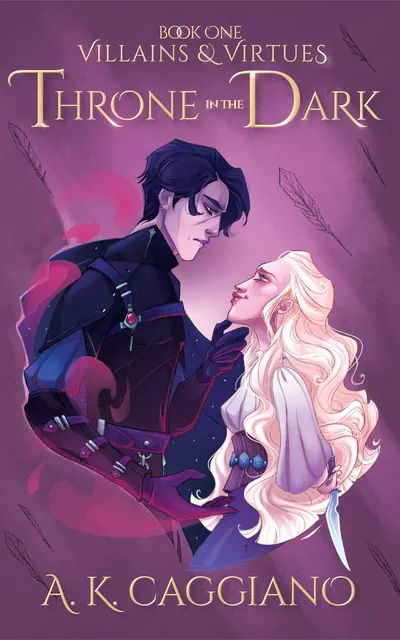
What defines her writing is that the humour comes first and the darkness is set dressing. The packaging on Throne in the Dark promises grimdark villain romance. The book delivers a fantasy workplace comedy about two people who cannot stand each other being forced to cooperate, with occasional blood. Chapters are short, the banter is constant, and the emotional beats sneak up on you precisely because the surrounding text is so unserious. Readers who want their villain romance genuinely menacing tend to bounce off her. Readers who found most dark romantasy a bit self-important tend to love her.
Throne in the Dark, published in 2022, follows Damien, the son of a demon, who is fully committed to fulfilling his dark legacy and is not very good at it. On the way he accidentally magically binds himself to Amma, a pickpocket, which ruins his plans in every possible direction. She will not stop talking. He cannot get rid of her. The bond forces them together and the plot follows from there. Summoned to the Wilds continues it and Eclipse of the Crown closes the arc. She has other series outside this world, and they share the same comic instinct, but Villains and Virtues is where her voice is sharpest.
The secondary cast deserves a mention because it is where a lot of the comedy lives. Damien's household is staffed by people who are entirely unimpressed by his ambitions, his father is a genuinely terrible parent in ways the book plays for laughs before it plays them straight, and the eventual antagonists are threatening enough to give the last act real weight. Caggiano is doing something structurally clever: she spends two books convincing you the whole thing is a farce, then cashes in that goodwill when the stakes turn serious. Readers who found the first book slight often report that the third one caught them off guard.
There is also a craft point worth making about the bond itself. Forced proximity is one of the oldest devices in romance and it usually functions as an excuse. Here the magical link has actual rules, actual costs, and actual plot consequences, and breaking it is a live goal for both characters rather than a formality. That is more work than the premise required, and it is the main reason the series holds up across three books instead of running out of road after one.
On heat, expect roughly a 3 on our book spice ratings. The intimate scenes are explicit but they are also frequently funny, which is a specific taste. If you want your open-door scenes played entirely straight, the tonal whiplash may not work for you. If you have ever finished a very serious dark romance and wanted to laugh, this is the correction.
She matters to a romantasy audience as the accessible end of villain romance. A large number of readers want a morally gray love interest without wanting the misery that usually comes attached, and there are not many authors serving that exact request well. Caggiano does. The obvious comparison is Assistant to the Villain, and readers who liked one reliably like the other, though Caggiano runs hotter and slightly meaner.
Where to start: Throne in the Dark, then the rest of Villains and Virtues in order. The trilogy is a single continuous story and the running jokes compound, so publication order matters more here than in most series. If the first fifty pages do not make you laugh, stop, because the book is not going to change its mind about what it is. If they do, you have a complete trilogy and a decent back catalogue waiting, which is a good position to be in.