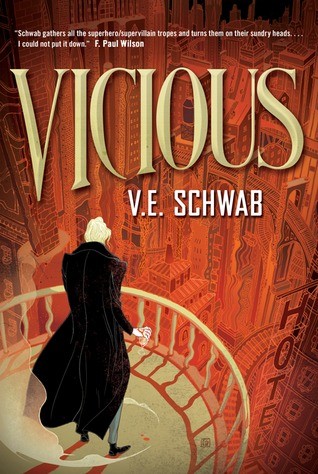
Vicious
Victor and Eli were college friends until superhuman powers transformed them into morally gray enemies. Their obsession with understanding and destroying each other spirals across decades in this dark tale of broken bonds and twisted love. Neither can exist without the other, even as they wage psychological and physical war.
Everything You Need to Know About Vicious
Victor Vale and Eli Ever were best friends at college. Brilliant, ambitious, and competitive in the way that only people who see themselves in each other can be. Their senior thesis explored ExtraOrdinaries, people with supernatural abilities , and the theory that near-death experiences could create them. They tested the theory on themselves. It worked.
Victor gained the ability to manipulate pain. Eli gained accelerated healing and an unshakeable conviction that God had chosen him. They also gained a mutual hatred that would define the next decade of their lives.
Ten years later, Victor breaks out of prison. He has spent a decade planning his revenge against Eli, who framed him for murder and has spent the intervening years killing other EOs while being celebrated as a hero. Victor assembles his own crew, a twelve-year-old with the ability to raise the dead, her dog, and a former cellmate with a talent for hacking, and begins dismantling Eli's life piece by piece.
There are no heroes in this book. There are two men who were given power and became exactly what they always were underneath: Victor, a pragmatic sociopath, and Eli, a righteous murderer. The question is not who will win. The question is who you find yourself rooting for, and what that says about you.
Schwab deconstructs the superhero genre with surgical precision. This is not a story about good versus evil, it is about two brilliant, damaged men who are both the hero and the villain of their own narratives.
Victor Vale is one of the most tense antiheroes in modern fiction. He is methodical, emotionally detached, and genuinely dangerous. But he protects the people he claims not to care about, and his code of loyalty , inconsistent as it is, makes him strangely sympathetic.
The non-linear structure is brilliantly handled. The timeline jumps between college-era flashbacks and present-day revenge plot, and each jump reveals information that recontextualises what you already know.
Sydney, the twelve-year-old necromancer, is the book's moral centre in a story that has none. Her power to raise the dead and her relationship with Victor provide unexpected warmth.
Violence throughout, including murder and torture. A character is imprisoned for a decade. Near-death experiences deliberately induced. A character murders multiple people and believes God sanctions it. Themes of moral relativism, the book does not tell you who to root for. A child is in danger. Medical experimentation and bodily harm. A character's best friend betrays them completely.
Eli's righteousness is the book's most unsettling element. He genuinely believes he is doing God's work by killing EOs, and his healing ability reinforces his conviction, he cannot die, so he must be chosen. The self-reinforcing logic of his delusion is more frightening than Victor's calculated vengeance.
Victor does not win cleanly. The confrontation with Eli is messy, costly, and does not provide the satisfaction of a clear resolution. Victor gets what he wanted and it is not enough , which is precisely the point.
Sydney's power to raise the dead is used at a critical moment, and the implications (can she bring back anyone? is there a cost?) drive the sequel.
The book refuses to assign moral labels. Victor is a murderer. Eli is a serial killer. Neither is the hero, but Schwab makes you care about both.
Vicious is the first book in the Villains duology, followed by Vengeful. The series is complete. Schwab has discussed the possibility of a third book but nothing is confirmed.
Reader Reviews
No reader reviews yet. Be the first!