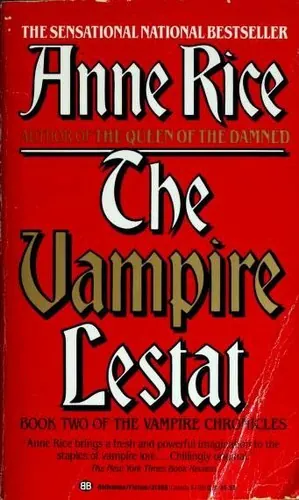
The Vampire Lestat
Lestat emerges from centuries of darkness to tell his own seductive, dangerous story. Unlike Louis's tragedy, Lestat revels in his power, beauty, and the chaos he creates. His tale reveals the dark heart of the vampire world and the price of immortal passion.
Everything You Need to Know About The Vampire Lestat
Lestat, the vampire who made Louis, finally tells his own story, and he is nothing like Louis's version. Born a penniless French nobleman with theatrical ambitions, he was abducted and turned by an ancient vampire named Magnus, who walked into a fire that same night and left Lestat alone with a tower full of gold and no rules. This is his account: turning his dying mother Gabrielle into his fiercest companion, hunting answers about what vampires actually are, and hearing the truth from the two-thousand-year-old Marius, keeper of Akasha and Enkil, the ancient Egyptian king and queen who started the entire bloodline. In the 1980s Lestat wakes from decades underground, decides the modern world deserves him, and becomes a rock star. Where Interview is noir and reflective, Lestat is chaotic, ambitious, and absolutely unrepentant.
Lestat is the fun vampire. He's selfish, arrogant, and alive in every cell, he wants experience, thrills, an audience. Rice's prose for Lestat is theatrical and energetic; the tone shifts from Louis's brooding to something closer to rock and roll. The ancient Egypt backstory is genuinely imaginative, reaching back to the source of all vampirism. Lestat's relationship with his mother is weird, charged, and complex. The rock-star finale (yes, Lestat becomes an actual rock star) is delightful and absurd. This book argues that immortality could be fun if you stop feeling guilty.
Graphic violence and murder, sexual content (explicit and manipulative), incest themes (Lestat and his mother), seduction of minors implied, religious desecration, drug use (blood addiction), psychological manipulation.
Lestat's mother Gabrielle becomes a vampire and his closest companion, and Rice writes their bond with an intensity that unsettles plenty of readers. The origin of vampires comes from Marius: a spirit named Amel fused with Akasha and Enkil, rulers of ancient Egypt, and every vampire since carries that original infection. They are not demons, just heirs of one catastrophic possession. Lestat wakes Akasha briefly by playing music in her shrine, a moment that pays off in The Queen of the Damned.
In the present day, Lestat publishes his autobiography and launches a rock act, announcing vampires to the world on purpose. The book ends at his debut concert in San Francisco, with the old ones of the blood closing in and Akasha stirring in her shrine. He is not punished for existing exactly as he is.
Read this right after Interview, it recontextualizes everything. If Louis's pessimism exhausted you, Lestat's energy will invigorate. Fans of unreliable narrators and charismatic villains will love him. Skip it if you can't stomach a protagonist who unapologetically murders and seduces his way through centuries.
Book two of The Vampire Chronicles, but can be read after Interview or even standalone. Functionally a 'answer to' or 'rebuttal of' Interview's narrative, so reading them back-to-back is ideal.
Reader Reviews
No reader reviews yet. Be the first!