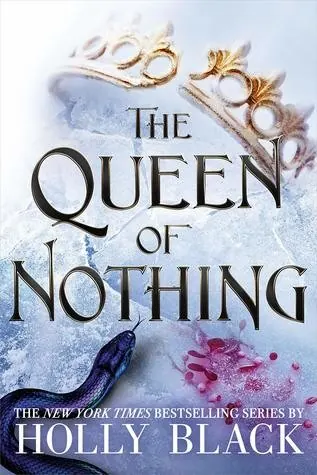
The Queen of Nothing
Jude has lost everything, her position, her title, her magic. But she's learned to play the game better than anyone. Now she must survive betrayal and reclaim her place in a world of political warfare.
Everything You Need to Know About The Queen of Nothing
Jude Duarte has been exiled to the mortal world by Cardan, the king she put on the throne and accidentally married. She is furious, humiliated, and living in her childhood home with her mortal sister Vivi. When news reaches her that Cardan has been cursed, transformed into a massive serpent by Madoc's machinations . Jude returns to Elfhame uninvited, because even in exile, she cannot let the kingdom fall.
The political crisis is immediate. Madoc has made his move for the throne, using the confusion of Cardan's transformation to build a military coalition. The courts are fracturing. And Jude, who is technically the queen of a kingdom that banished her, must face being simultaneously the most hated and most needed person in Elfhame.
The final confrontation between Jude and Madoc, daughter against father, ambition against ambition, drives the book toward a resolution that is as politically complex as it is emotionally charged.
The Jude-Cardan resolution is immensely satisfying. Black has been building their dynamic across three books, and the payoff is worth it. The enemies-to-lovers arc reaches its conclusion with a confession scene that fans of the genre will remember.
Jude at full power, politically, strategically, personally , is the character fans have been rooting for since The Cruel Prince. She does not win by becoming softer or more Fae. She wins by being exactly who she is: mortal, cunning, and refusing to yield.
The Madoc confrontation is emotionally complex because Black has never let you forget that he genuinely loves Jude. His villainy is political, not personal, and the resolution honours that nuance.
Black wraps the trilogy cleanly. Every thread is resolved, every character gets a satisfying endpoint, and the tone is exactly right.
Violence and battle scenes. A character is cursed and physically transformed against their will. Political warfare and betrayal. A father-daughter conflict that includes genuine threat of violence. Brief sexual content. Themes of exile, identity, and belonging. A character must decide whether to forgive someone who caused them great harm.
The serpent transformation is a curse, not Cardan's true nature. Grimsen the smith wove treachery into the Blood Crown, and when Cardan destroys the crown to end the cycle of contested rule, the curse turns him into the serpent. Jude breaks it the only way left to her: she beheads the serpent with Nightfell, gambling everything on the idea that killing the curse is not the same as killing the king. Cardan walks out of the snake's body alive.
The exile reveal reframes The Wicked King. Cardan banished Jude until the crown forgave her, and Jude is the crown. She could have pardoned herself and come home at any time. His cruelty was a riddle with her freedom hidden inside it, and his love was real the whole way through.
Jude ends the series as the openly acknowledged High Queen of Elfhame, a mortal ruling the Folk beside Cardan.
Madoc loses. Jude defeats him without killing him, and he is stripped of power and exiled to the mortal world. Sparing him is her choice, and it is the clearest sign of how far she has come.
The Queen of Nothing is the third and final book in The Folk of the Air trilogy. Completes the Jude-Cardan arc. There is a companion novella, How the King of Elfhame Learned to Hate Stories, told from Cardan's POV.
Reader Reviews
No reader reviews yet. Be the first!