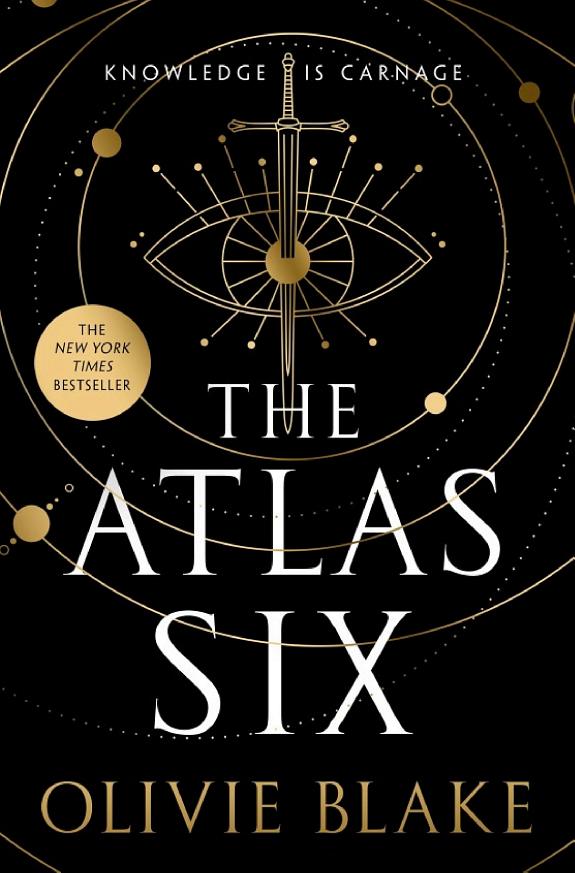
The Atlas Six
Six talented magicians are selected by a mysterious patron to join an elite secret society. But their recruitment may be far more sinister than they realize, and the price of membership demands everything. Trust fractures as dark truths emerge.
Everything You Need to Know About The Atlas Six
Six magicians are recruited by the Alexandrian Society, a secret organisation that guards the world's most dangerous and powerful repository of magical knowledge. The catch: only five will be admitted. One will be eliminated, and in this context, elimination may be literal.
The six candidates are extraordinary. Libby Rhodes and Nico de Varona are physicists who manipulate matter and force. Reina Mori communes with nature on a molecular level. Parisa Kamali reads minds. Callum Nova manipulates emotions. Tristan Caine sees through illusions. Each is the best in their discipline, and each has been chosen because their combined abilities can do something no individual magician can: access forbidden knowledge that has been locked away for centuries.
They have one year to prove their worth. The dynamics are immediately volatile , alliances form, rivalries sharpen, and the sexual tension alone could power a small city. But the real game is not the competition between them. It is the question of what the Alexandrian Society actually wants, what the library truly contains, and what they will be asked to sacrifice for the privilege of knowing.
Blake writes magic as an intellectual discipline, and the result is a fantasy that feels more like a graduate seminar than a quest. The characters argue about the nature of reality, the ethics of knowledge, and whether power should be used or hoarded, and it is genuinely tense because Blake makes the ideas as seductive as the characters.
The ensemble dynamics are the engine. Six brilliant, flawed people locked in a building together, competing for survival , it is a pressure cooker. Every combination of characters produces different chemistry: rivalry, attraction, manipulation, grudging respect.
Parisa and Callum are standout characters. She reads minds without remorse; he manipulates emotions with unsettling ease. They represent the moral extremes of the cast, and their scenes together are electric.
The prose is sharp, witty, and occasionally devastating. Blake writes dialogue that sounds like people who are too smart for their own good, which is exactly what these characters are.
Psychological manipulation and mind-reading without consent. A character manipulates others' emotions. Violence including magical combat. A morally ambiguous elimination process. Explicit sexual content. Themes of power, privilege, and the ethics of knowledge. Characters make choices that harm others for personal gain. A character's past includes trauma. The competitive structure creates genuine threat.
The elimination is real. One of the six must die for the others to be fully initiated into the Society. The twist is that the candidates are the ones who must choose and carry it out, the Society is testing their willingness to sacrifice as much as their magical ability.
The library contains knowledge that is genuinely dangerous , not just powerful spells but understanding of reality's fundamental mechanics. The Society guards it not to share it but to prevent it from being used.
The romantic and sexual dynamics, particularly Libby-Nico tension, Parisa's manipulations, and Tristan's isolation, drive character development as much as the magical competition.
The ending pulls its darkest trick with Libby. Her boyfriend Ezra, who has been far more than he seemed all along, abducts her, and the remaining five let the world believe she died. The elimination is satisfied on paper, nobody's hands look bloody, and the fracture it leaves in the group powers the sequel.
The Atlas Six is the first book in The Atlas series (three books: The Atlas Six, The Atlas Paradox, The Atlas Complex). Originally self-published, it was acquired by a major publisher. Read in order.
Reader Reviews
No reader reviews yet. Be the first!