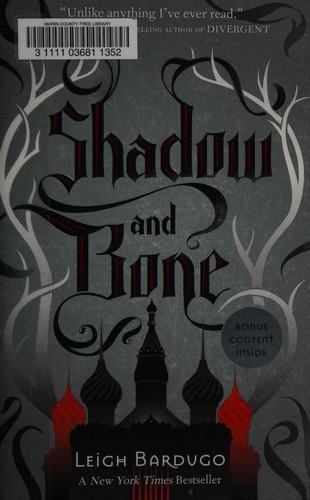
Shadow and Bone
Alina Starkov discovers she has a power that could be the key to saving her war-torn world, but this power also makes her a target. Forced into the army's elite magical unit, she must learn to control her abilities while managing politics and betrayal. Her power could save everyone or destroy them all.
Everything You Need to Know About Shadow and Bone
Alina Starkov is a mapmaker in the First Army of Ravka, a nation split in two by the Shadow Fold, a swath of impenetrable darkness filled with monsters called volcra that tear apart anyone who tries to cross. Ravka is poor, war-torn, and desperate. Alina is unremarkable in every way that matters, or so she believes.
During a crossing of the Fold, her regiment is attacked. Volcra descend. Her best friend Mal is about to die. And Alina erupts with light , a blinding, impossible burst of power that drives the monsters back. She is a Sun Summoner, the rarest and most powerful kind of Grisha, and she has been hiding this ability (unconsciously, it turns out) her entire life.
She is taken to the Little Palace, the headquarters of the Grisha, the Second Army, magic users who serve the crown. There she meets the Darkling, the impossibly powerful, centuries-old leader of the Grisha, who tells her she is the key to destroying the Shadow Fold. He is magnetic, attentive, and makes her feel seen for the first time. He also has plans she does not fully understand.
Alina must learn to control her power, survive the politics of the Little Palace, and decide who she trusts, the Darkling who promises to change the world, or Mal, the tracker she has loved since childhood, who now seems impossibly far away. The answer is more complicated than she wants it to be, and the Darkling's true nature is darker than anyone suspects.
Bardugo's Ravka is inspired by Tsarist Russia, and the cultural details, the food, the military structure, the clothing, the language , give it a texture that sets it apart from the generic medieval European settings that dominate fantasy. The Grisha magic system (Corporalki, Etherealki, Materialki, body, elemental, material) is elegant and well-structured.
The Darkling is one of the most tense villains in YA fantasy. He is not a cackling tyrant. He is intelligent, charismatic, and genuinely believes he is right. His scenes with Alina crackle with tension because the attraction is real, and the danger is equally real. Bardugo understands that the best villains are the ones you almost agree with.
Mal grounds the story in something real. While the politics and magic swirl around her, Alina's relationship with Mal, childhood best friend, the boy who never noticed her that way, the tracker who would cross a continent for her, keeps the emotional stakes personal.
The Fold itself is a masterful piece of world-building. A literal wall of darkness that splits a nation is both a plot device and a metaphor, and Bardugo uses it brilliantly.
Violence throughout, including monster attacks (volcra) and magical combat. A mass casualty event during a Fold crossing. Manipulation and gaslighting by a love interest. Themes of military conscription and forced service. A character is tortured. Power imbalance in a romantic context (the Darkling is centuries old and Alina's commander). Brief descriptions of poverty, starvation, and orphanhood. The book ends on a dark revelation that recontextualises the central romance.
The Darkling's true plan is the book's central twist. He does not want to destroy the Shadow Fold, he created it, centuries ago, and he wants to expand it. With Alina's power under his control, he can use the Fold as a weapon, making Ravka invincible by threatening to unleash darkness on any nation that opposes them. He is not saving Ravka. He is conquering it.
The stag . Morozova's amplifier, a mythical creature that would supercharge Alina's power, becomes the focal point of the third act. Both Alina and the Darkling are hunting it. Mal tracks it across the wilderness. The Darkling gets there first, kills it, and has its antlers forged into a collar that he locks around Alina's neck, binding her power to his command.
The collar is one of the most raw symbols in the series, it is literally a leash. Alina's escape from the Darkling's control at the end of the book, aided by Mal, sets up the power dynamic for the rest of the trilogy.
Alina and Mal's relationship shifts fundamentally. He sees her power for the first time, and it frightens him. She sees his fear, and it distances her. This tension, can he love her as she actually is, not as the orphan girl he grew up with, drives the rest of the trilogy.
This is the entry point into the Grishaverse, Bardugo's interconnected fantasy world that spans three series. If you want to eventually read Six of Crows (widely considered her best work), Shadow and Bone gives you the foundation, though Six of Crows can also be read standalone.
Readers who enjoyed The Name of the Wind, Graceling, or Avatar: The Last Airbender will find the magic system and geopolitics appealing. The light-vs-dark thematic framework is straightforward but effective.
This may not work if you have already read Six of Crows and expect the same level of complexity. Shadow and Bone is more traditional YA fantasy , single POV, chosen one narrative, love triangle. Bardugo grew significantly as a writer between the two series. Consider Shadow and Bone the foundation and Six of Crows the masterwork.
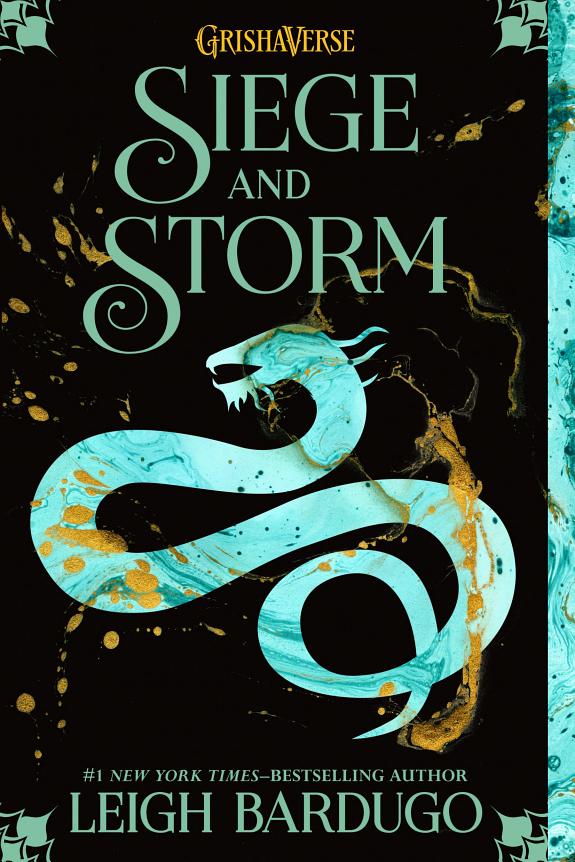
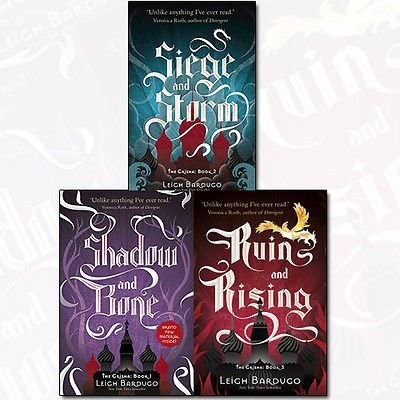
Shadow and Bone is the first book in the Shadow and Bone trilogy, followed by Siege and Storm and Ruin and Rising. It is the first entry in the Grishaverse, which also includes Six of Crows, Crooked Kingdom, King of Scars, and Rule of Wolves. The Netflix adaptation combined the Shadow and Bone trilogy with the Six of Crows characters.
Reader Reviews
No reader reviews yet. Be the first!