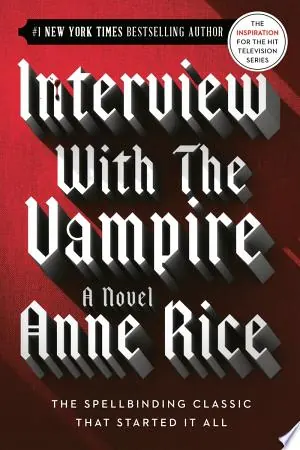
Interview with the Vampire
Louis recounts his centuries as a vampire, from his human despair to the dark seduction into eternal life. Bound to the charismatic but cruel Lestat, he deals with love, morality, and the hunger that defines existence. His story exposes the terror and beauty of immortality.
Everything You Need to Know About Interview with the Vampire
Louis, a 200-year-old vampire, tells a young journalist his entire history. He was made by Lestat in 1791 New Orleans, seduced, transformed, trapped. For years they lived as predators and lovers in a decaying mansion, until Lestat turned a five-year-old girl, Claudia, and Louis's careful internal balance shattered. Claudia grew furious at her eternal childhood, Lestat became increasingly unstable, and Louis... suffered. The novel follows Louis across centuries: New Orleans, Europe, a search for others like them, the realization that immortality means endless grief and boredom.
This is the book that made vampire fiction literary. Rice refuses to make vampirism romantic or redemptive, it's a curse, a dark humor, a prison. The relationship between Louis, Lestat, and Claudia is emotionally complex and genuinely disturbing. Louis's voice is philosophical and bitter; he's had time to think about what he's lost, and it eats him alive. The gothic atmosphere is thick. The sensuality is present but never glossy. The moral questions linger: if you're damned, do ethics matter?
Murder, blood, child endangerment (a child is turned into a vampire and ages normally but emotionally trapped), sexual content (including with Claudia, suggesting abuse), suicide (attempted), despair, manipulation.
Claudia kills Lestat by draining him, then dies herself, executed by the Parisian vampire court for killing one of their kind. Louis survives her, and it destroys him further. There is no redemption, no escape, no fix. The interview itself is Louis confessing to a stranger because he's tired of secrets. By the novel's end, Lestat, believed dead, reappears, implying even that escape route is impossible.
Essential reading for anyone interested in vampire fiction, gothic literature, or exploring damnation as theme. Not for readers who need heroes or redemption arcs. The pacing is slow and meditative; plot takes a back seat to internal anguish. If you want action, skip it.
Book one of The Vampire Chronicles. Works as a complete novel on its own, but Rice wrote sequels (The Vampire Lestat, The Queen of the Damned, etc.). Interview can be read standalone without loss.
Reader Reviews
No reader reviews yet. Be the first!