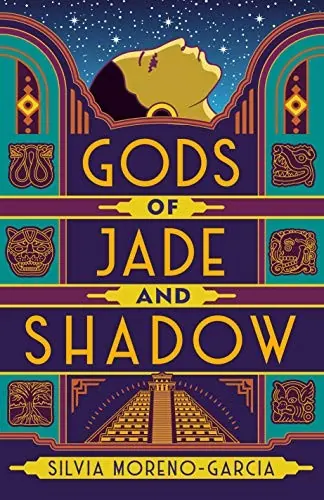
Gods of Jade and Shadow
In Jazz Age Mexico, Casiopea meets Hun Kan, the Mayan god of death, when she flees her oppressive home. The god needs her help, and she needs a chance at independence. Together they deal with 1920s intrigue, mythology, and an attraction neither expected.
Everything You Need to Know About Gods of Jade and Shadow
Casiopea Tun lives with her wealthy but cold grandfather in 1920s Mexico, treated like a servant despite her bloodline. When she opens the old chest in his room, she finds bones inside, and a splinter of bone lodges in her hand. The bones belong to Hun-Kamé, the Mayan god of death, imprisoned for decades after his brother Vucub-Kamé betrayed him and took his throne. Now Hun-Kamé is walking around in the flesh, bound to Casiopea through the shard in her hand, drawing on her life to stay whole.
Casiopea travels with him across Jazz Age Mexico, dancing, drinking, dodging gods, and falling hard for a man who should be her enemy. The longer the journey runs, the more human he becomes and the more it costs her. And Vucub-Kamé is not waiting quietly for his brother to arrive.
Moreno-Garcia's prose is rich without being overwrought. This book *tastes* like Mexico in the 1920s, the music, the architecture, the class hierarchies, the magic all of it threaded together. Hun-Came is a genuinely strong love interest: ancient, morally questionable, bound by inhuman logic, but also tender with Casiopea. The slow-burn romance is written with patience; they don't kiss until halfway through, and every moment before that matters.
The supporting cast is fantastic. The gods themselves are strange and logical in their own way, not evil but absolutely indifferent to human morality. And Casiopea's growth, from servant girl to someone willing to bargain with death itself, is earned. She doesn't become a warrior princess. She becomes smarter.
Violence and death (magical and otherwise). Undead/decayed imagery. References to sacrifice and blood rituals (historical context). Predatory behavior from a secondary character. Some body horror.
The endgame is a contest. Vucub-Kamé forces a race along the Black Road of Xibalba, Casiopea as Hun-Kamé's champion against her cousin Martín as his. Before it starts, Vucub-Kamé offers the lovers a way to stay together, both of them dying and pledging themselves to him, and they refuse. When it becomes clear Casiopea will win, Vucub-Kamé orders Martín to kill her, but she reaches the World Tree first. Hun-Kamé regains his throne and his missing eye, revives Casiopea, and offers her anything she wants. What she wants is him, and that is the one thing that cannot happen now that he is a god again and she is a living woman. He sends her back to Middleworld with gifts, and she sets out to see the world on her own terms. The parting is the point. The love is real, and it still ends.
If you loved Mexican Gothic or want Mesoamerican mythology front and center rather than as a side plot, this is essential. Fans of the immortal love interest archetype will find a quieter, sadder take on it here. For readers who want historical fantasy grounded in a specific place and time, with real Maya theology instead of Westernized magic. Not for you if you need a happy ending or a conventional romance conclusion.
Standalone novel. This is a complete story with real closure, even if it's melancholy. No sequel hooks, no waiting for book two. Read and be done.
Reader Reviews
No reader reviews yet. Be the first!