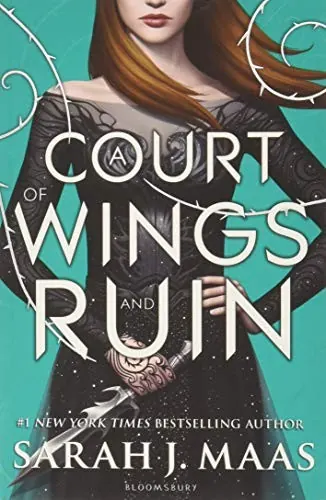
A Court of Wings and Ruin
Feyre has returned to the Spring Court, tasked with gathering intelligence for the Night Court while her heart remains with Rhysand. As she maneuvers through deadly politics and her growing powers, she uncovers a conspiracy that threatens everything. Her loyalty will be tested in ways she never anticipated.
Everything You Need to Know About A Court of Wings and Ruin
Feyre is back in the Spring Court, and she is not a captive this time, she is a spy. Sent by Rhysand to dismantle Tamlin's alliance with the King of Hybern from the inside, she plays the role of the grateful, broken woman Tamlin expects while quietly destroying his court from within. It is cold, calculated work, and Feyre is terrifyingly good at it.
But the King of Hybern is not waiting around. He has the Cauldron , an ancient weapon capable of unmaking entire civilisations, and he intends to use it to shatter the wall between the human and Fae lands. The mortal queens have made their own deals. Armies are gathering. And Feyre's sisters, Nesta and Elain, are still reeling from being forcibly turned into High Fae, changed against their will by the very weapon everyone is now trying to control.
The Night Court needs allies, and getting them means figuring out centuries of grudges between the seven courts of Prythian. Feyre and Rhysand must convince the other High Lords to stand together against Hybern, lords who do not trust each other, some of whom have personal reasons to hate Rhysand, and all of whom have their own agendas.
The war that has been building since book one finally arrives, and it is not clean. Alliances fracture. Sacrifices are demanded. And the cost of saving Prythian may be higher than anyone is willing to pay.
The spy sequence in the Spring Court is some of the best writing in the series. Feyre's manipulation of Tamlin, Ianthe, and the Spring Court sentries is calculated and precise. Watching her play a long game while maintaining her cover gives the opening a thriller energy that the series has not had before.
The High Lord meeting is a set piece that delivers on books' worth of political build-up. Each court has distinct aesthetics, magic systems, and grudges, and watching them collide in one room is satisfying. Helion, Thesan, and Tarquin get enough page time to feel like real characters rather than just names.
The battle sequences in the final act are Maas at her most ambitious. Multiple POV-worthy storylines converge, Nesta's emerging power, Elain's unexpected role, Amren's true nature, and Feyre and Rhysand's bond tested to its absolute limit. The scope is massive but the emotional stakes keep it personal.
The Feyre-Rhysand relationship deepens in quieter ways here. They are past the will-they-won't-they phase and into partnership territory. The scenes where they strategize, disagree, and support each other feel earned.
Large-scale battle violence including character deaths (named characters die on-page). Graphic depictions of war, soldiers dying, magical destruction, gore. Continued PTSD themes from book two. Explicit sexual content. A character makes a sacrifice involving their own death (temporary). Themes of forced transformation revisited (Nesta and Elain's trauma). Betrayal and political manipulation throughout. A character's longtime abuser is confronted but not killed, which frustrates some readers.
The biggest moment is Rhysand's death. He pours everything he has into reforging the Cauldron to restore the wall, and it kills him. For several pages, he is genuinely dead. Feyre's grief is raw and raw. The High Lords then collectively bring him back, mirroring Feyre's resurrection in book one , which some readers find poetic and others find consequence-free.
Amren's true nature is revealed: she is something ancient and not-Fae, trapped in a Fae body thousands of years ago. She sacrifices her physical form to help destroy the Cauldron, then is remade as mortal High Fae. She loses most of her power but gains the ability to truly live.
Nesta's connection to the Cauldron is established as more significant than anyone expected. She took something from the Cauldron when it made her, and that stolen power defines her arc going forward in Silver Flames.
Elain kills the King of Hybern, not with magic but with a blade. It is Elain, the gentle one, the gardener, the sister everyone underestimates, who delivers the killing blow. This moment reshapes how readers see her.
Tamlin helps in the final battle, though grudgingly. His arc is deliberately left unresolved. He is not redeemed, not punished, just broken. The epilogue shows him alone in a decaying Spring Court.
If you have read the first two books, you are reading this one, there is no entry point here. But for readers deciding whether to commit to the series: this is the payoff book. Every political thread, character arc, and romantic subplot from the first two books converges here.
Readers who enjoy large-scale fantasy battles in the vein of Lord of the Rings or the Stormlight Archive (but with romance and significantly faster pacing) will find the final act satisfying. If you loved the political maneuvering in The Priory of the Orange Tree or the found-family stakes of The Raven Boys, the emotional register will feel familiar.
This may disappoint if you wanted more Feyre-Rhysand relationship development. Their arc is largely resolved by this point, and the focus shifts to plot, politics, and secondary characters.
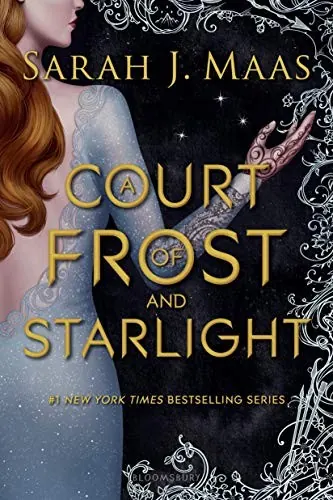
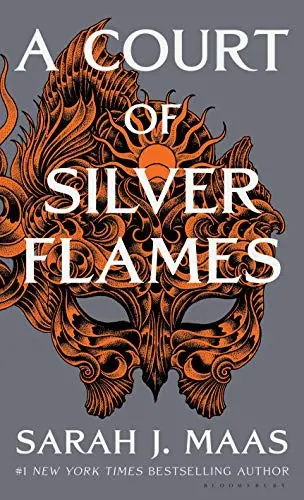
A Court of Wings and Ruin is the third and final book in Feyre's trilogy within the ACOTAR series. It wraps up the war with Hybern and Feyre's character arc. The series continues with A Court of Frost and Starlight (a bridge novella) and A Court of Silver Flames (which shifts to Nesta as protagonist). You cannot skip any of the first three books.
Reader Reviews
No reader reviews yet. Be the first!