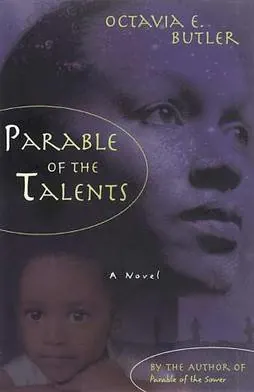
Parable of the Talents
Octavia E. Butler
Author Reading Guide
Octavia E. Butler (1947-2006) was the visionary author of Kindred and Parable of the Sower, the first science fiction writer to win a MacArthur genius grant, and one of the most important American writers of the twentieth century.
Octavia E. Butler
Octavia E. Butler
Octavia E. Butler
Octavia E. Butler wrote her way out of poverty in Pasadena, a shy, six foot tall Black girl raised by a housekeeper mother, telling herself stories because the world offered her none with people like her in them. By her death in 2006 she had become the first science fiction writer ever awarded a MacArthur Fellowship, a multiple Hugo and Nebula winner, and the author of some of the most prophetic fiction America has produced. Two decades later her books sell better than they did in her lifetime, and 2026 marks fifty years since her debut novel Patternmaster, an anniversary being celebrated with symposia and new editions.
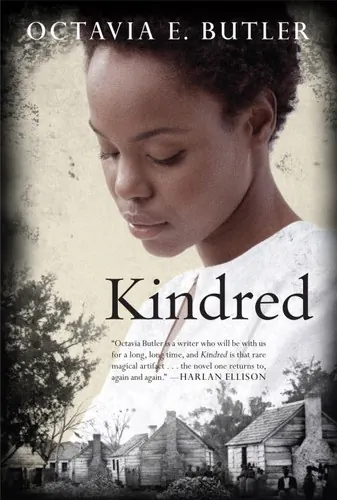
Kindred, from 1979, remains her most read book. Dana, a Black writer in 1976 Los Angeles, is repeatedly wrenched back in time to a Maryland plantation to save the life of the white boy who will become her ancestor, and each stay grows longer and more dangerous. It is time travel stripped of adventure and used as a scalpel, forcing the reader to live inside slavery rather than observe it. The Parable duology is her other pillar: Parable of the Sower in 1993 follows Lauren Olamina, a teenage empath walking north through a California destroyed by climate collapse and demagoguery, building a new faith called Earthseed as she goes. Its sequel, Parable of the Talents, won the Nebula and features a presidential candidate who promises to make America great again, a detail that has made the books feel less like fiction every year. Readers keep returning to them as manuals for surviving plausible futures.
Her range went further: the Patternist series traced telepathic selective breeding across centuries, with Wild Seed, its finest entry, pitting the immortal shapeshifter Anyanwu against the body stealing Doro in a battle of wills spanning continents. Lilith's Brood imagined humanity rescued and genetically merged with aliens after nuclear war, consent and coercion tangled beyond untangling. Her last novel, Fledgling in 2005, reinvented the vampire as Shori, a genetically engineered Black vampire girl navigating symbiosis and desire, Butler's one true genre romance adjacent book. The screen has finally caught up: FX adapted Kindred in 2022, and a Parable of the Sower film is in development at A24. The graphic novel adaptations of Kindred and the Parables by Damian Duffy and John Jennings have become bestsellers in their own right.
Plainly: Butler is not romantasy, and on The Fae Shelf spice scale her work sits around 1 to 2. Fledgling and Lilith's Brood contain strange, unsettling intimacy, deliberately so, because desire in Butler is always tangled with power and survival. Nobody reads her for swoon.
Read her as ancestry. Every romantasy heroine who survives on stubbornness, every bond negotiated with a dangerous inhuman being, every story about power imbalance in intimacy, Butler examined first and hardest. She is the genre's conscience and its deepest well, and reading her makes you a sharper reader of everything else on this site.
Her method deserves its own mention. Butler wrote affirmations to herself in her journals, now famous from exhibitions of her papers at the Huntington Library: promises that her books would be read by millions, written while she was broke and working before dawn around warehouse jobs. She taught herself discipline as a form of hope, and she revised relentlessly, which is why her plain, driving prose reads so effortlessly. The journals became a phenomenon of their own, quoted by writers of every genre as proof that clarity of intention can be a survival tool. So be it, see to it, she wrote, and then she did.
Start with Kindred, the most accessible entry and a complete standalone. Then Parable of the Sower if you can bear a book that predicted too much, or Wild Seed if you want her imagination at full strength. Go slowly. She wrote every sentence to be felt.