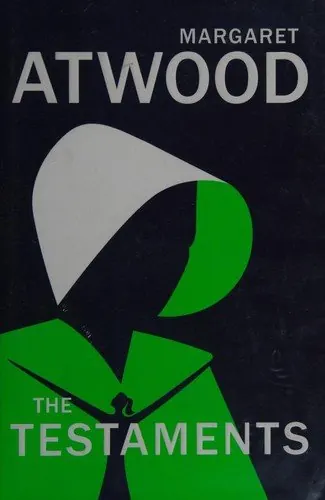
The Testaments
Margaret Atwood
Author Reading Guide
Author of The Handmaid's Tale. The literary godmother of every dystopia where women's bodies are the battlefield.
Margaret Atwood
Margaret Atwood
Margaret Atwood would probably raise an eyebrow at appearing on a romantasy site, which is fair, because she famously raised one at being called a science fiction writer too. The Canadian author, born in Ottawa in 1939, has spent sixty years writing novels, poetry, and criticism that refuse tidy shelving, and along the way she built the book that sits underneath a startling amount of modern speculative fiction about power and gender: The Handmaid's Tale.
Published in 1985, it imagined Gilead, a theocratic America where fertile women are property of the state, and it did so with a rule Atwood set herself: nothing happens in the book that has not happened somewhere, to someone, in history. That constraint is why the novel keeps renewing its relevance with every news cycle, why the red cloak and white bonnet became a global protest uniform, and why the Hulu adaptation ran for six seasons. The 2019 sequel The Testaments won her a second Booker Prize and gave Gilead's downfall the interior view readers had waited three decades for.
Her range beyond Gilead is enormous. The MaddAddam trilogy does biotech apocalypse with corporate satire. Alias Grace and The Blind Assassin, the latter her first Booker winner, braid historical fiction with unreliable narration. Hag-Seed retells The Tempest inside a prison theater program. The through-line is a cold, precise intelligence about how power justifies itself, and prose that can put a knife between your ribs without raising its voice.
What does any of this have to do with romantasy? More than it appears. The genre's current wave of dystopian romance, from Red Queen through Powerless through half the dark court intrigues on this shelf, runs on questions Atwood formalized: who owns a woman's body, what survival costs under surveillance, how complicity gets manufactured. The difference is that romantasy answers those questions with rebellion and a love interest, while Atwood answers them with documentary chill. Reading her is like seeing the genre's skeleton without the prom dress.
Start with The Handmaid's Tale, obviously; it is short, it is brutal, and it recontextualizes a hundred books you have already read. Do not come to her for comfort or for romance, because she is interested in neither. Come for the clarity. Her books on our shelf are below.
The screen story reached its ending recently. The Hulu series concluded with its sixth season in 2025, and an adaptation of The Testaments is in development to carry Gilead forward, so the red cloaks are not leaving the culture any time soon.
Atwood herself, now in her mid-eighties, published Book of Lives: A Memoir of Sorts in late 2025, her first memoir, covering everything from a childhood spent in the northern Quebec bush to six decades at the center of literary life, delivered with exactly the dry wit the subtitle promises. It became an instant bestseller, reviewers treated it as an event, and it is the right pick for readers who want the mind behind Gilead without another trip inside it. Beyond that, her short fiction is the underrated corner of the catalog, Stone Mattress in particular, nine tales with a body count and a sense of humor, while Old Babes in the Wood, her 2023 collection, is the gentler companion, love and loss in late life, both showing a side of her the dystopias hide. And she was publishing poetry for years before she ever published a novel. The practical advice for a newcomer stands in order: The Handmaid's Tale first, The Testaments only if you need to know how Gilead falls, The Blind Assassin when you want her at full literary power, and the memoir when you want her company rather than her warnings.