Soulstar
C.L. Polk
Soulstar
C.L. Polk
Author Reading Guide
C.L. Polk is the Canadian author of the World Fantasy Award winning Witchmark and the Kingston Cycle, a gaslamp fantasy trilogy about magic, class, and the cost of empire. Their novella Even Though I Knew The End won the Nebula Award.
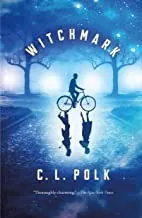
C.L. Polk broke out in 2018 with Witchmark, a debut that won the World Fantasy Award for Best Novel and picked up nominations for the Nebula, the Locus, and the Lambda Literary Award. That is an unusual haul for a first book, and it happened because Witchmark did something the field was not doing much of at the time. It took the polite Edwardian drawing room fantasy that readers associate with cosy magic and set it against a war built on an atrocity, then made the romance between the two leads the mechanism by which the truth comes out.
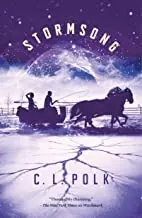
Polk writes gaslamp fantasy with a political spine. The Kingston Cycle, made up of Witchmark, Stormsong, and Soulstar, is set in a country modelled on Edwardian Britain in the aftermath of a war that reads like a version of the First World War. Magic in this setting is not a wonder, it is a resource, and the state has organised itself around extracting it from people who have no say in the matter. Each of the three books hands the point of view to a different character, and each one pulls the camera further back, moving from a single doctor hiding his abilities to the machinery of government to the people trying to tear the whole arrangement down. It is a trilogy that gets angrier as it goes, in a controlled way.
The other thing Polk does consistently is write queer love stories as a matter of course rather than as a subject. Miles and Tristan in Witchmark, and the relationships across the later books, are given the same narrative weight and the same interiority as any other central relationship. There is no coming out arc, no tragedy engineered from identity. That approach carried into their other work, including The Midnight Bargain, a Canada Reads finalist about a young woman choosing between sorcery and a socially advantageous marriage, and Even Though I Knew The End, a Nebula winning novella that puts a queer detective story into 1940s Chicago with a deal with the devil at the centre. If you like forbidden love that draws its tension from institutions rather than misunderstandings, this is the shelf for you.
Heat level is where prospective readers should set expectations. On our book spice ratings, Polk sits around a 1 out of 5. The romance is central, the yearning is real, and the physical scenes are largely handled off the page or in a paragraph. This is deliberate. Polk is writing in a register closer to literary historical fantasy than to romantasy proper, and the restraint suits the material. Readers arriving from the heavier end of the genre should know this going in rather than feeling misled.
Why Polk matters to a romantasy audience is a fair question, since these are not romantasy books in the marketing sense. They matter as genre ancestry and as a palate cleanser. A great deal of what romantasy now takes for granted, court politics as a pressure system on a relationship, magic as a marker of class, a love story that changes the political situation rather than sitting inside it, is executed here with unusual precision and a very short page count. If you have read six doorstop romantasy series in a row and want something that does similar work in three hundred tighter pages, Polk is the correction.
Start with Witchmark. It is self contained enough to work as a standalone if you stop there, and it is the award winner for good reason. If it lands, continue to Stormsong and then Soulstar in order, since the point of view handoffs only pay off in sequence. Readers who liked the academic rigour and colonial anger of Babel, or the political heft of The Priory of the Orange Tree, will find Polk operating in adjacent territory at a fraction of the length.