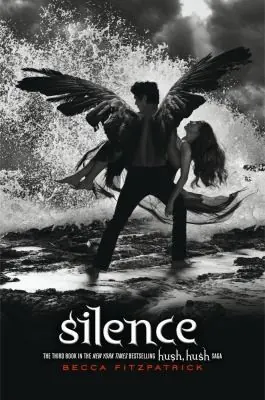
Silence
Becca Fitzpatrick
Author Reading Guide
Becca Fitzpatrick is the author of the Hush, Hush saga, the fallen-angel YA phenomenon that put four consecutive books on the New York Times bestseller list between 2009 and 2012.
Becca Fitzpatrick's career is a snapshot of a very specific publishing era. She enrolled in an online writing class, spent four years drafting and collecting rejection letters, and sold Hush, Hush to Simon & Schuster, where it debuted as a New York Times bestseller in 2009. That timing matters: Twilight had cracked the market wide open, and paranormal romance about dangerous supernatural boys was the hottest category in YA. Fitzpatrick's contribution was to swap vampires for fallen angels, and it worked spectacularly.
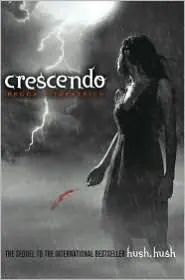
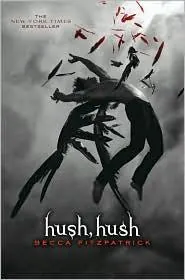
The Hush, Hush saga runs four books: Hush, Hush (2009), Crescendo (2010), Silence (2011), and Finale (2012), every one of them a New York Times bestseller. The series follows Nora Grey, an ordinary high schooler, and Patch, a fallen angel who is by turns her stalker, protector, tormentor, and love interest. That description is not a criticism smuggled in; it is the actual appeal. Patch is one of the definitive dangerous-love-interest figures of his era, and the books commit fully to the gothic push-pull of attraction and threat. Modern readers split hard on him. Some find the dynamic deliciously dark, others find it a checklist of red flags, and both camps are reading the same book correctly.
After the saga ended, Fitzpatrick published two standalone thrillers, Black Ice (2014) and Dangerous Lies (2015), trading angels for survival stories and witness protection. Neither matched the saga's cultural footprint, and she has kept a low public profile since. Her legacy rests almost entirely on those four angel books, which is not a small legacy: an entire generation of romantasy readers cut their teeth on Patch and Nora before graduating to fae courts and dragon riders.
We will be straight with you about where she fits on this site. Fitzpatrick is genre ancestry, not current romantasy. The forbidden love dynamics, the brooding immortal hero, the mortal girl marked by fate, all of it flows directly into the books dominating the genre today. Reading Hush, Hush in 2026 is a bit like watching an early-2000s teen drama: the DNA of everything current is visible, alongside tropes that have aged sideways. Heat-wise the saga is tame by modern standards, a 1 on our book spice ratings. The darkness is atmospheric and emotional rather than physical: plenty of menace and longing, no explicit content.
Who should read her now? Readers curious about the genre's paranormal roots, anyone nostalgic for the fallen-angel boom, and fans of paranormal elements who want a fast, pulpy throwback. Readers who bounce off possessive heroes or need their YA to hold up to 2026 sensibilities should probably admire this one from a distance.
It is also worth understanding what the saga did for the category commercially. Between 2009 and 2012, fallen angels were briefly the biggest thing in YA, and Hush, Hush sat at the front of that wave alongside Lauren Kate's Fallen. Publishers bought angel books by the crate, most vanished, and Fitzpatrick's series is one of the few the market still remembers. The books were optioned for film more than once, fan campaigns for a Patch casting ran for years, and the covers, all moody monochrome and falling feathers, defined an entire design era. None of the adaptations materialized, which in hindsight preserved the series as a purely bookish phenomenon. If you were on book blogs in 2011, the phrase "angel boy" means Patch. That is cultural penetration most authors never achieve with any book.
Start with Hush, Hush and read in publication order: Crescendo, Silence, then Finale. The saga is one continuous story and does not reward skipping around. Black Ice and Dangerous Lies are standalones for completists, closer to romantic suspense than fantasy. Four books, one arc, a firm ending. As a time capsule of YA paranormal romance at its commercial peak, it is still a fun ride.